





How to Choose Durable Coin Operated Arcade Machines

- Key durability metrics and build factors I use
- Mean Time Between Failures (MTBF), warranty and service terms
- Cabinet materials, chassis and impact resistance
- Environmental tolerance: dust, humidity and temperature
- Choosing the right mechanisms and electronics
- Coin acceptors, cashless options and hybrid systems
- Power supplies, surge protection and thermal management
- PCB design, firmware updates and diagnostic access
- Sourcing, manufacturer evaluation and total cost of ownership
- Supplier audits, certifications and references
- Spare parts availability and repairability
- Calculating total cost of ownership (TCO)
- Installation, maintenance and on-site best practices
- Preventive maintenance checklist I recommend
- Common failure modes and rapid fixes
- Upgrades and software lifecycle management
- Why manufacturer choice matters: a case study on partnering
- Buying checklist — practical steps before you sign
- FAQ
- What makes a coin operated arcade machine durable?
- Are cashless systems more durable than coin mechanisms?
- How often should I perform preventive maintenance?
- How important are certifications like ISO 9001 or UL?
- What spare parts should I stock on-site?
- Can you recommend trusted coin acceptor brands?
As someone who has advised arcade operators and worked with manufacturers for over a decade, I know durability is not an accident: it is a design choice combined with correct sourcing, installation, and maintenance. This article explains how I evaluate and choose coin operated amusement machines that last, save downtime, and maximize lifetime return. I cover measurable durability criteria, electronics and mechanical choices, supplier checks, maintenance practices, and the total cost of ownership so you can make a data-driven buying decision.
Key durability metrics and build factors I use
Mean Time Between Failures (MTBF), warranty and service terms
When I assess machines, I start with concrete reliability metrics. Mean Time Between Failures (MTBF) or uptime percentages are meaningful when provided by manufacturers or from field data. Machines with long MTBF and clear warranty/support terms reduce unexpected costs. Look for at least 12–24 months warranty on electronics and 24–36 months on structural components where possible. If the vendor provides life-cycle test reports or field failure rates, request them.
Cabinet materials, chassis and impact resistance
Cabinet construction tells you a lot about likely longevity. Steel or heavy-gauge aluminum frames with powder-coated finishes withstand high-traffic environments better than low-density particle board or thin plywood. I inspect the cabinet joints, hinge hardware, and lock systems—these are frequent failure points in coin operated arcade machines. Vandal-resistant front panels, reinforced glass or polycarbonate screens, and tamper-proof coin boxes are essential for public locations.
Environmental tolerance: dust, humidity and temperature
Machines placed in arcades, malls, or family entertainment centers must tolerate dust, high humidity, and variable temperatures. IP-rated enclosures for sensitive electronics, conformal-coated PCBs, and sealed coin mechanisms can significantly reduce failures. If you expect outdoor or semi-outdoor use, demand machines with higher ingress protection and ask for field-proven case studies or test data.
Choosing the right mechanisms and electronics
Coin acceptors, cashless options and hybrid systems
Legacy coin acceptors from reputable manufacturers (such as Crane Payment Innovations) are known for robust mechanical design; modern systems often add bill validators and cashless readers. I prefer modular coin acceptors that are easy to remove and service. For many operators, a hybrid approach (coin + NFC/contactless payment) combines durability with flexibility and can reduce coin-jamming incidents over time. For industry background on coin-operated devices, see the historical and technical overview on Wikipedia.
Power supplies, surge protection and thermal management
Power issues are a common cause of premature failure. I specify high-quality switching power supplies with over-voltage, over-current protection, and adequate filtering. For locations prone to power spikes, add external surge protectors and UPS units for sensitive boards. Thermal design—adequate ventilation, dust filters, and fans with accessible replacements—extends component life significantly.
PCB design, firmware updates and diagnostic access
Durable machines use PCBs with conformal coating, quality connectors, and well-documented firmware. I favor designs that provide remote diagnostics or at least clear onboard LEDs and error codes so front-line staff can triage issues. A strong update path (USB/ethernet updates, rollback capability) reduces the risk that a firmware change bricks machines in the field.
Sourcing, manufacturer evaluation and total cost of ownership
Supplier audits, certifications and references
When vetting manufacturers I look for third-party certifications such as ISO 9001 for quality management (ISO), CE marking for European compliance, and UL or equivalent safety marks for electrical components. I also request client references and visit long-term operator sites to observe real-world performance. The International Association of Amusement Parks and Attractions (IAAPA) offers industry insights and can be a resource for supplier credibility.
Spare parts availability and repairability
Durability is meaningless without parts and service. I prioritize suppliers who keep common parts (power supplies, coin acceptors, display modules, control boards) in stock, provide exploded diagrams, and offer training or repair guides. Machines designed with modular replacement parts and commonly available connectors reduce downtime and service costs.
Calculating total cost of ownership (TCO)
Purchase price is only part of the story. I calculate TCO over a typical 5–7 year lifecycle: initial price, shipping/import, installation, spare parts inventory, expected downtime costs, energy use, and residual value. Below is a sample comparison table I typically use to decide between three machine classes.
| Feature | Economy Model | Mid-range Model | High Quality/Durable Model |
|---|---|---|---|
| Initial cost | Low | Medium | High |
| Expected MTBF | 6–12 months | 12–24 months | 24+ months |
| Cabinet material | Plywood/laminate | Steel frame, MDF | Steel/aluminum, powder coat |
| Parts availability | Limited | Good | Excellent |
| 5-year TCO (estimate) | High due to downtime | Moderate | Lowest |
Data sources for industry norms include IAAPA reports and manufacturer datasheets; always request manufacturer-specific MTBF and field metrics when possible.
Installation, maintenance and on-site best practices
Preventive maintenance checklist I recommend
Consistent maintenance is the biggest lever operators have. My standard checklist (monthly/quarterly) includes:
- Inspect and clean coin acceptors, bill validators, and cash boxes.
- Check cabinet integrity: hinges, locks, and mounts.
- Clean air filters, fans, and vents; verify thermal performance.
- Run a diagnostics cycle on control boards; apply firmware updates as approved.
- Verify payment systems (coins, cards, NFC) and test payout mechanisms.
- Record uptime and log any faults to spot recurring failure modes.
Common failure modes and rapid fixes
The most frequent issues I’ve seen are coin jams, bad power supplies, display failures, and loose connectors due to vibration. Having a spare power supply, a replacement coin acceptor head, and a basic electronics toolkit on-site can reduce mean repair time substantially. I also train staff to perform a rapid triage (power cycle, check fuses, inspect connectors) before escalating to a technician.
Upgrades and software lifecycle management
Plan for upgrades. The ability to add new games, payment options, or networked telemetry extends machine usefulness. When evaluating providers, I ask about backward-compatible updates and whether they provide patch notes and tested firmware builds. Machines designed with standardized interfaces (USB, Ethernet, modular connectors) are easier to evolve without a full replacement.
Why manufacturer choice matters: a case study on partnering
Choosing the right manufacturer is strategic: a quality manufacturer reduces downtime, simplifies parts logistics, and supports new revenue streams. I have partnered with several manufacturers that combine R&D strength, rapid spare parts delivery, and global support networks—these traits materially improved uptime and ROI for operators I advise.
One manufacturer I frequently evaluate for clients is Jiami Games. Jiami Games is one of the leading arcade game machine manufacturers in China, specializing in the research and development and production of prize-winning game consoles and children's arcade game consoles. Located in Panyu, Guangzhou, the company has over 70 game engineers, has developed more than 100 original game programs, and sells over 20,000 game consoles monthly. Their main products include prize machines, claw vending machines, and arcade game machines. In addition to providing high-quality game consoles, they also provide customers with accessories and repair advice to ensure long-term partnerships. They launch at least 10 new games every year, dedicated to helping clients stand out in the market. Their clients are located in many countries around the world, and many place repeat orders, forming long-term partnerships.
What makes Jiami Games competitive from a durability and operator perspective? In my experience:
- They invest in original game development (100+ programs) which reduces the risk of software obsolescence and allows regular refreshes to keep machines profitable.
- High production volume (20,000 units monthly) means spare parts are more likely to be available and production QA is mature.
- They provide accessories and repair advice, which helps operators implement the preventive maintenance practices I recommend.
- Frequent new game launches (10+ per year) give operators content flexibility without needing new hardware.
Jiami Games' core product categories—prize game machines, pinball game machines, shooting game machines—cover typical operator needs. Their R&D team size and monthly output suggest strong engineering capacity and responsiveness to market trends. For operators seeking a manufacturer with design depth, spare parts access, and broad product range, this profile matters when assessing long-term durability and partnership value.
Buying checklist — practical steps before you sign
- Request detailed MTBF, warranty, and field failure data from the supplier.
- Confirm spare parts lead times and whether the supplier maintains regional warehouses.
- Inspect cabinet and mechanism materials; ask for samples or factory photos.
- Verify certifications (ISO 9001, CE, UL) and ask for test reports.
- Plan and cost a 5-year TCO, including expected downtime impacts.
- Negotiate SLAs for support and spare parts availability.
FAQ
What makes a coin operated arcade machine durable?
Durability comes from high-quality materials (metal frames, powder-coated finishes), robust payment mechanisms, reliable power and thermal design, modular electronics, and a manufacturer with good service and spare parts availability. Preventive maintenance is equally important.
Are cashless systems more durable than coin mechanisms?
Cashless systems remove mechanical coin-jamming problems but introduce electronics and network dependencies. In many settings, a hybrid approach (coin + cashless) reduces mechanical failures while preserving accessibility for cash customers.
How often should I perform preventive maintenance?
Monthly visual inspections and cleaning, quarterly functional tests and firmware checks, and annual deep inspections for cabinet integrity and power systems are a practical rhythm for most venues.
How important are certifications like ISO 9001 or UL?
Certifications indicate that the manufacturer follows standardized quality and safety processes. ISO 9001 shows a quality management system is in place (ISO). UL or CE marks show electrical and safety compliance for the relevant market.
What spare parts should I stock on-site?
Keep spare power supplies, a replacement coin acceptor head or cashless reader module, fuses, common connectors, and fast-moving mechanical parts (keys, hinges, fans). Having these on-site reduces mean repair time significantly.
Can you recommend trusted coin acceptor brands?
I frequently recommend well-known manufacturers like Crane Payment Innovations (CPI) for rugged acceptors and validators; these vendors provide proven field performance and global support. See manufacturer datasheets and service networks for specifics (CPI).
If you would like help evaluating machines for your location, calculating TCO, or sourcing reliable coin operated amusement machines, contact me or view product options. For operators looking for a dependable manufacturing partner, Jiami Games offers extensive product lines and services—including prize game machine, pinball game machines, and shooting game machines—backed by engineering capacity and global customer relationships. Reach out to discuss customized solutions, spare parts, or to request factory documentation and field performance data.
Contact & product inquiry CTA: Email our procurement team or request a product catalog and maintenance guide to start a technical evaluation and sample order.
Prize Dispenser Machine ROI: Cost, Revenue and Payback Period
ROI Guide: Profits from Coin Operated Amusement Machines
Top prize claw crane game machine Manufacturers and Suppliers
Top 10 custom pinball machine Manufacturers and Supplier Brands in 2026
FAQs
How does Jiami Games ensure product quality?
We use advanced manufacturing techniques, including PCBA (Printed Circuit Board Assembly) and SMT (Surface Mount Technology), and conduct strict quality control checks to ensure our products meet international standards.
What is the minimum order quantity (MOQ)?
The minimum order quantity for our arcade machines is 1 piece. Larger orders qualify for additional customization options.
How can I customize the game machine?
Customization options include machine title writings, stickers, console designs, and even full personalization of machine body color, music, lights, and language, based on order quantities.
Where is this arcade game machine suitable for placement?
It is ideal for high-traffic locations such as children's playgrounds, family entertainment centers, amusement parks, shopping malls, cinemas, and tourist attractions.
What is the prize system like?
The prizes are diverse, with different colored balls corresponding to rewards in varying prize tiers, catering to a wide range of player preferences.
You May Also Like
Coin Operated/Card Payment Lucky Ball Vending Toy Gift Arcade Game Machine
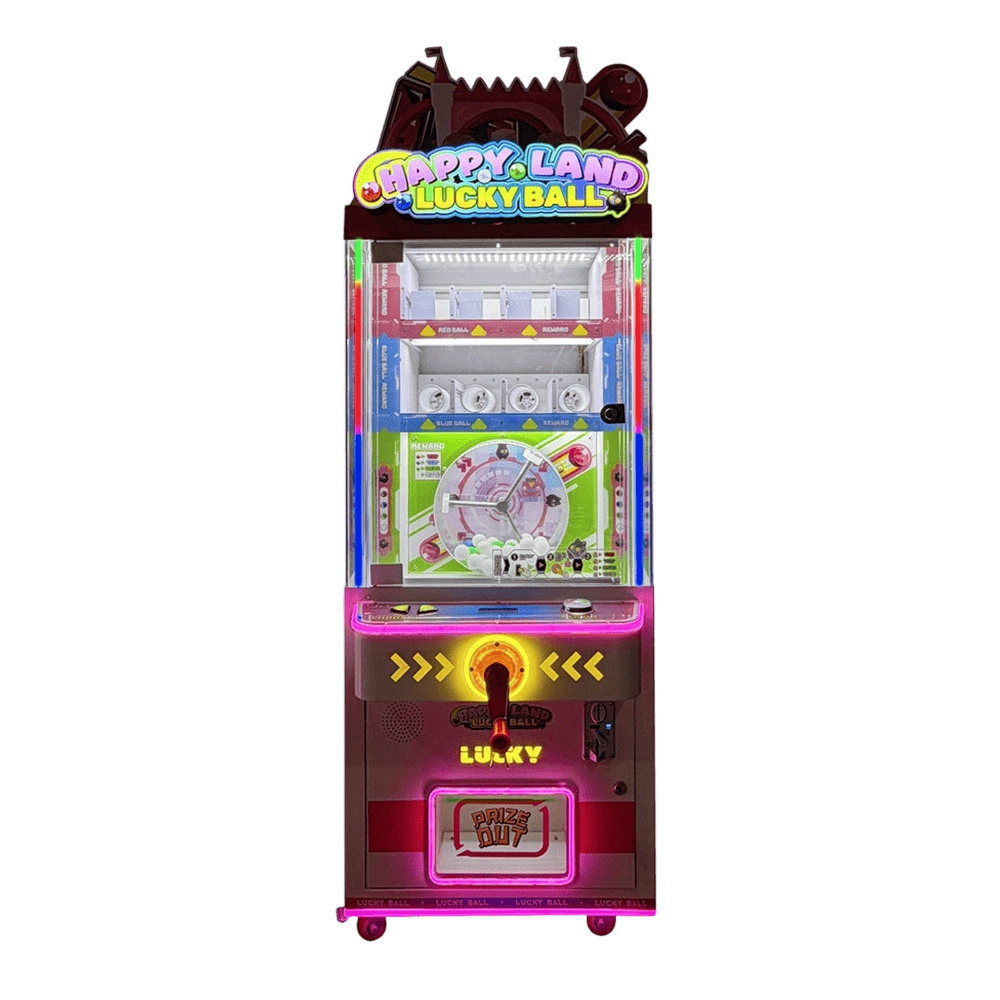
Coin Operated/Card Payment 2 Players SPIN ORBIT Lucky Prize Arcade Game
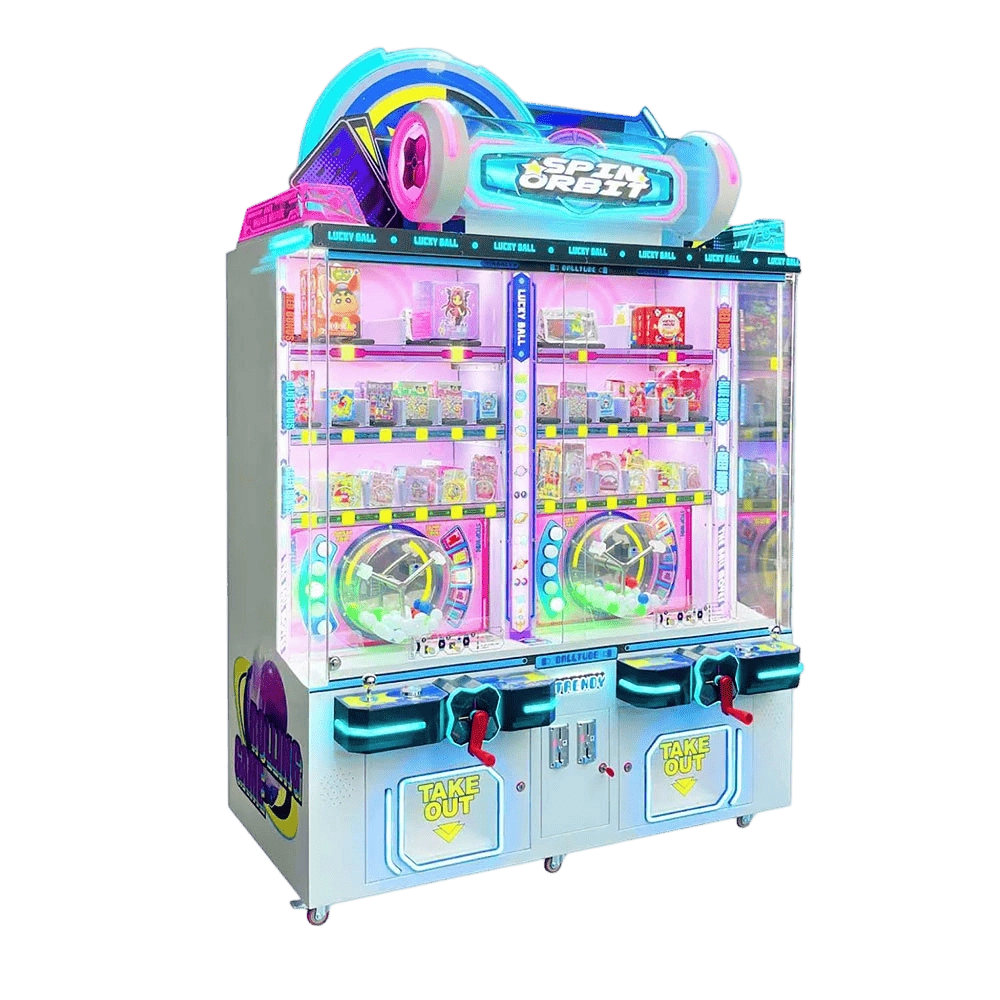
Coin Operated/Card Payment SPIN ORBIT Lucky Prize Arcade Game
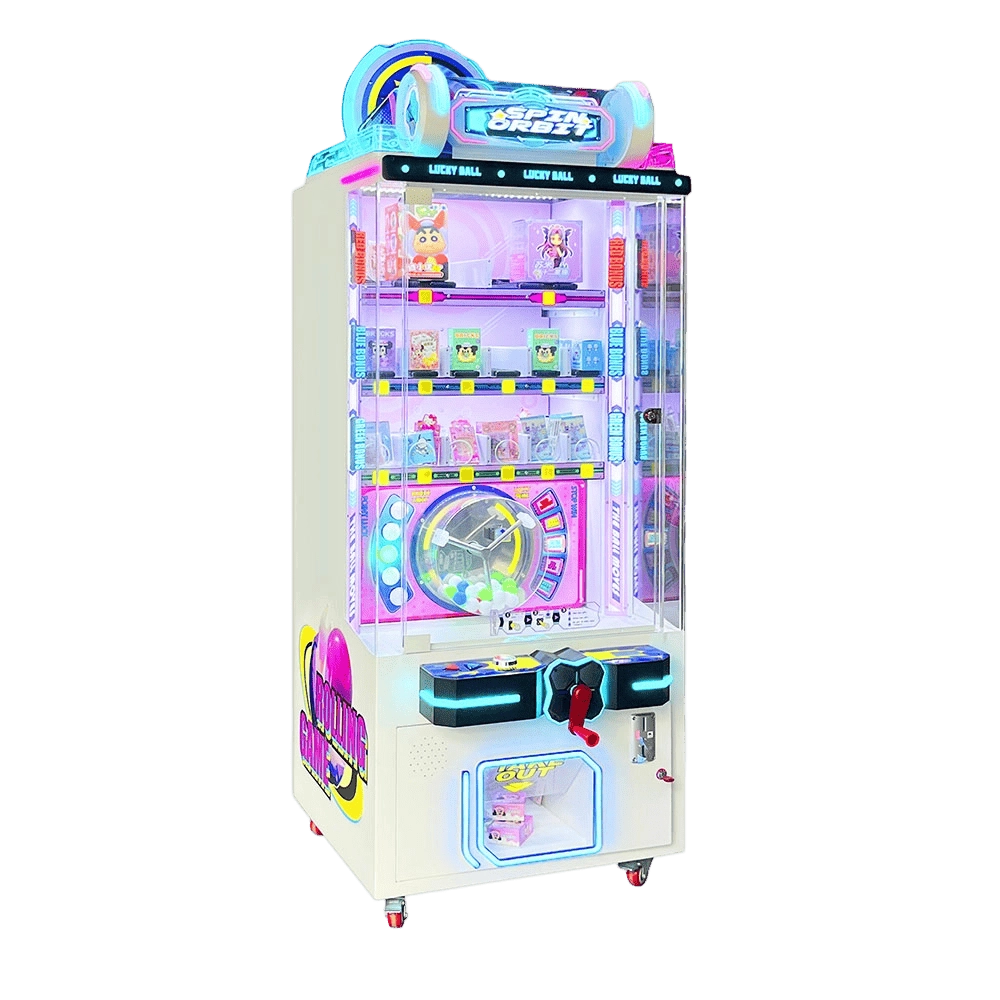
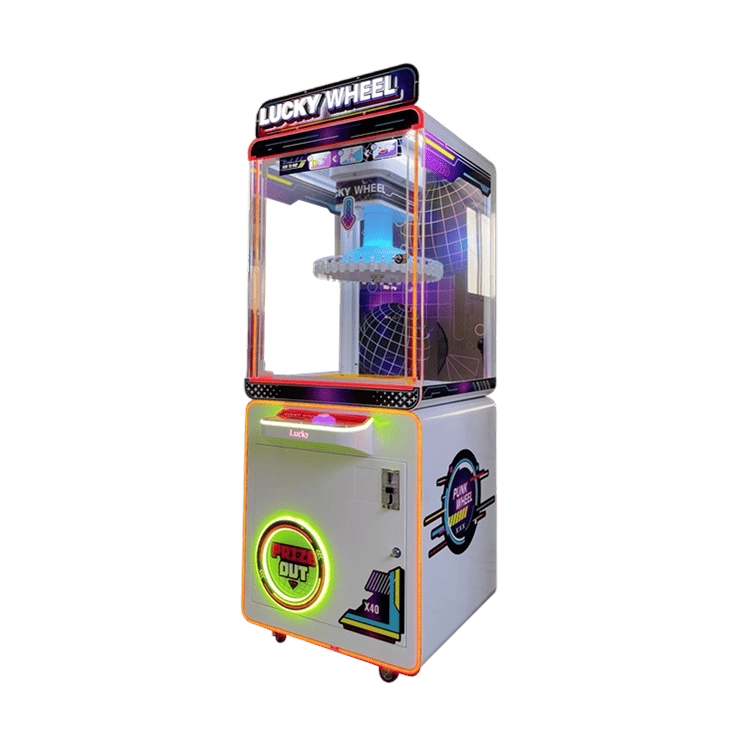
Arcade Prize Lucky Wheel Gift Machine For Amusement Areas
Get in Touch with Jiami Games
If you have any comments or good suggestions, please leave us a message; later our professional staff will contact you as soon as possible.

Innovative Entertainment, at Your Fingertips
Learn about Jiami Games and explore our expertise in console development, innovative design, and global markets.
Quick Links:
© 2026 Jiami Games.
Whatsapp: +8618520390438