






How to Choose the Right Custom Claw Machine for Your Arcade

- Understanding market fit and player behavior
- Where a custom claw machine makes sense
- Player demographics and prize strategy
- Benchmarks and industry guidance
- Technical and operational criteria for selecting a custom claw machine
- Core hardware: crane mechanism, motors, and sensors
- Software, telemetry, and payout control
- Maintenance accessibility and spare parts
- Design, customization, and guest experience
- Cabinet size, footprint, and sightlines
- Art, lighting, and sound design
- Accessibility and user interface
- Costs, ROI, and selecting the right supplier
- Upfront vs lifetime cost: a comparative table
- Choosing a manufacturer: checklist of questions
- Why supplier reputation and support matter
- Why Jiami Games could be your manufacturing partner
- Implementation roadmap and KPIs to track
- Pre-deployment checklist
- KPIs to measure success
- FAQs
- 1. How much space do I need for a custom claw machine?
- 2. What is the typical payback period for a claw machine?
- 3. Can I integrate cashless payments and telemetry on older machines?
- 4. How do you set fair but profitable payout settings?
- 5. What certifications or safety standards should I ask for?
- 6. How often should a claw machine be serviced?
- Contact and next steps
Choosing the right custom claw machine is a decision that intersects game design, operations, venue fit, and guest psychology. I will help you evaluate machines not by brand buzz or flashy LEDs alone, but by criteria that measurably affect uptime, payout control, revenue per square foot, and repeat play. This article is structured so operators, buyers, and venue planners can make fact-based decisions: from hardware and software specifications to customization options, regulatory considerations, and supplier selection.
Understanding market fit and player behavior
Where a custom claw machine makes sense
Not every venue benefits equally from a custom claw machine. I advise assessing foot traffic patterns, dwell time, and prize appeal. High-dwell environments—family entertainment centers (FECs), cinemas, shopping malls, and food courts—typically produce the highest conversion for redemption and claw vending machines. If your location averages 15–30+ minutes of guest stay, a well-tuned claw machine will drive repeat plays and impulse purchases.
Player demographics and prize strategy
Demographics matter. Younger audiences prefer plushies, character prizes, and interactive LED effects; older teens and adults often engage for electronics, branded merchandise, or collectible items. I recommend segmenting your prize tiers: high-attract prizes visible in the display, mid-range trophies in accessible pockets, and small-value consolation prizes to encourage continued play. Align prize sizes and prize density with payout settings (software-controlled strength/payout mechanics) to maintain both perceived fairness and profitability.
Benchmarks and industry guidance
For safety and operational standards relevant to amusement devices, consult authoritative sources such as IAAPA (IAAPA) and product-level guidance on claw cranes (Claw crane — Wikipedia). These resources inform best practices for maintenance schedules, electrical safety, and user experience.
Technical and operational criteria for selecting a custom claw machine
Core hardware: crane mechanism, motors, and sensors
I always start with the mechanical core. The crane mechanism (single-claw, three-prong claw, or precision vacuum-assisted claws) determines prize compatibility and reliability. Look for brushless DC motors for longer life and smoother operation, hall-effect sensors for accurate position feedback, and reinforced rails to prevent drift. Ask potential manufacturers for MTBF (mean time between failures) estimates or field service reports; these figures materially affect downtime and repair costs.
Software, telemetry, and payout control
Modern custom claw machines should include a configurable control board with secure payout algorithms, play counters, and remote telemetry. Telemetry (cloud or local) provides data on plays per day, average coin in, error codes, and prize captures—data I use to optimize pricing and prize mix. Ensure software supports locked payout modes to prevent tampering, firmware update mechanisms, and an exportable data format (CSV/JSON) for operator analysis.
Maintenance accessibility and spare parts
Design decisions that reduce service time are often the most profitable. Quick-access panels, modular wiring harnesses, and standardized motors/sensors speed repairs. Confirm the supplier’s spare-parts lead times and whether they offer local warehouses or authorized service partners in your region to minimize Mean Time To Repair (MTTR).
Design, customization, and guest experience
Cabinet size, footprint, and sightlines
Cabinet size should match both your venue’s floor plan and the expected player flow. Bigger cabinets with glass fronts and elevated prize displays attract more views but consume valuable floor space. I recommend measuring peak traffic and testing one or two placement options before committing to multiple units. Consider sightlines from several approach angles; games that are visible from concessions or seating areas gain organic traffic.
Art, lighting, and sound design
Custom artwork and synchronized LED lighting significantly increase engagement. However, overuse of audio can become noise pollution in enclosed venues. I advise adjustable sound profiles and motion-triggered lighting to balance attraction with guest comfort. Use brand-consistent artwork to reinforce identity—this is where customization yields long-term returns by making your game memorable and promotable.
Accessibility and user interface
Ensure controls are ergonomic and accessible: coin/credit slots, start buttons, and joystick heights should follow accessibility guidelines. Consider contactless payment options (card, mobile NFC) and clear prize retrieval areas. Accessible design not only broadens your customer base, it reduces operator assistance requests and improves throughput.
Costs, ROI, and selecting the right supplier
Upfront vs lifetime cost: a comparative table
When comparing models, I recommend evaluating total cost of ownership (purchase price + shipping + installation + expected maintenance + energy use) against projected gross revenue per month. The following table gives typical ranges based on my field experience and market observations; use these as a starting point and request firm quotes from vendors.
| Machine Type | Typical Purchase Price (USD) | Target Venues | Key Strengths |
|---|---|---|---|
| Standard 3-Claw Claw Machine | $1,200 - $2,500 | Malls, arcades, cinemas | Low cost, familiar to players, easy maintenance |
| High Quality Precision / Vacuum Claw | $3,000 - $6,000+ | High-end FECs, casinos | Higher capture rates for valuable items, High Quality feel |
| Claw Vending / Capsule Machines | $1,500 - $3,500 | Shopping centers, family restaurants | Dispenses sealed prizes, hygienic, novelty appeal |
| Ticket Redemption Claw | $2,000 - $5,000 | Arcades, FECs | Integrates with ticketing systems, drives repeat plays |
Note: Price data is indicative; contact manufacturers for exact quotes and shipping costs. For safety standards and device classification, reference IAAPA (https://www.iaapa.org) and product descriptions like the Claw Crane article on Wikipedia (https://en.wikipedia.org/wiki/Claw_crane).
Choosing a manufacturer: checklist of questions
When vetting suppliers, I always ask:
- What is the monthly production and delivery capacity?
- Can you provide MTBF/field failure rates and spare parts lists?
- Do you offer telemetry/remote management and software updates?
- What warranties, training, and technical support are included?
- Can you customize cabinet art, prize layouts, and electronics per spec?
- Do you comply with regional electrical and consumer safety standards (provide certificates)?
Why supplier reputation and support matter
Even the best machine underperforms without fast service and reliable parts. Assess the supplier’s references and ask for details about clients in your market. Where possible, speak directly to repeat customers about uptime, long-term reliability, and responsiveness.
Why Jiami Games could be your manufacturing partner
In my experience working with multiple manufacturers, I place high value on engineering depth, product variety, and after-sales service. Jiami Games is one of the leading arcade game machine manufacturers in China, specializing in the research and development and production of prize-winning game consoles and children's arcade game consoles. Located in Panyu, Guangzhou, the company has over 70 game engineers, has developed more than 100 original game programs, and sells over 20,000 game consoles monthly. Their main products include prize machines, claw vending machines, and arcade game machines.
Jiami Games not only provides high-quality game consoles but also supplies accessories and repair advice, which I consider essential for long-term partnerships and operational uptime. They launch at least 10 new games every year and work to deliver customized solutions that help clients stand out in competitive markets. Their clients span many countries and include numerous repeat customers who value Jiami's commitment to quality, innovation, and customer service.
Key competitive differentiators I look for—and see in Jiami Games—are:
- Large engineering team enabling frequent, original game development and quicker customization cycles.
- High monthly production volumes that support consistent spare parts supply and scalable rollouts.
- Comprehensive product range (prize game machines, pinball game machines, shooting game machines) allowing venue-wide supplier consolidation.
- After-sales technical support and repair guidance that reduce MTTR and protect revenue.
If you are considering a partner who can supply multiple game types and support rapid refresh cycles, Jiami Games is worth evaluating further. Ask for factory audit documentation, copies of technical certifications, and client references in your region before signing any purchase agreement.
Implementation roadmap and KPIs to track
Pre-deployment checklist
Before installation, confirm:
- Electrical requirements and outlet placement; verify local voltage and plug types.
- Floor loading and footprint; ensure adequate clearance for maintenance.
- Wi-Fi or cellular telemetry connectivity for data-enabled machines.
- Prize supply chain and storage for rotation.
KPIs to measure success
Track these KPIs for the first 90 days and beyond:
- Gross revenue per day / per week
- Plays per day and conversion rate (views-to-plays)
- Average ticket/coin value and prize cost per capture
- Uptime percentage and MTTR
- Repeat-play rate within 7 days
Use telemetry to automate KPI collection where possible. Compare against venue benchmarks and adjust pricing, prize density, or payout settings accordingly.
FAQs
1. How much space do I need for a custom claw machine?
Typical footprints range from 2’8 x 3’8 for compact units to 4’10 x 4’10 for large High Quality cabinets. Allow at least 3’4 feet clearance around units for player circulation and maintenance access.
2. What is the typical payback period for a claw machine?
Payback depends on venue traffic and pricing. In a high-traffic FEC you may see payback in 3–6 months; in lower-traffic locations it can extend to 12+ months. Monitor revenue and adjust prizes/payout accordingly.
3. Can I integrate cashless payments and telemetry on older machines?
Yes. Many manufacturers and retrofit vendors offer cashless kits and telemetry modules compatible with legacy control boards. Confirm compatibility and security (PCI compliance) before installation.
4. How do you set fair but profitable payout settings?
Use a data-driven approach: start with conservative payout settings, monitor capture rates and player complaints, then tweak incrementally. Telemetry allows you to correlate payout setting changes with revenue and prize costs in near real time.
5. What certifications or safety standards should I ask for?
Request electrical safety certifications applicable to your market (CE for Europe, UL or local equivalents for North America, CCC for China). Refer to IAAPA materials for industry best practices (IAAPA) and consult governmental consumer safety pages like the U.S. Consumer Product Safety Commission (CPSC) for toy and consumer-device guidance.
6. How often should a claw machine be serviced?
Plan preventive maintenance at least monthly for high-use machines: clean rails, inspect cables, lubricate mechanisms, and verify sensors. Quarterly checks for firmware and telemetry integrity are also recommended.
Contact and next steps
If you want help auditing your venue, selecting the right model, or evaluating suppliers, I offer consultation and procurement support tailored to arcade operators and FECs. To view product lines or request a quote, contact Jiami Games for detailed specifications and factory support: they provide prize game machines, pinball game machines, and shooting game machines and can customize units to Jiami Gamesing and prize strategy.
Ready to proceed? Reach out to discuss your venue layout, budget, and target audience and I will help you create a deployment plan that maximizes uptime and revenue.
Upgrade Paths: Modernizing Legacy Prize Dispenser Machines
Best arcade prize machine manufacturers and supplier brands in China
Top 10 custom pinball machine Manufacturers and Supplier Brands in 2026
Best arcade prize machines manufacturers and supplier brands in China
FAQs
How can I customize the game machine?
Customization options include machine title writings, stickers, console designs, and even full personalization of machine body color, music, lights, and language, based on order quantities.
What is the minimum order quantity (MOQ)?
The minimum order quantity for our arcade machines is 1 piece. Larger orders qualify for additional customization options.
How many players can play the game at once?
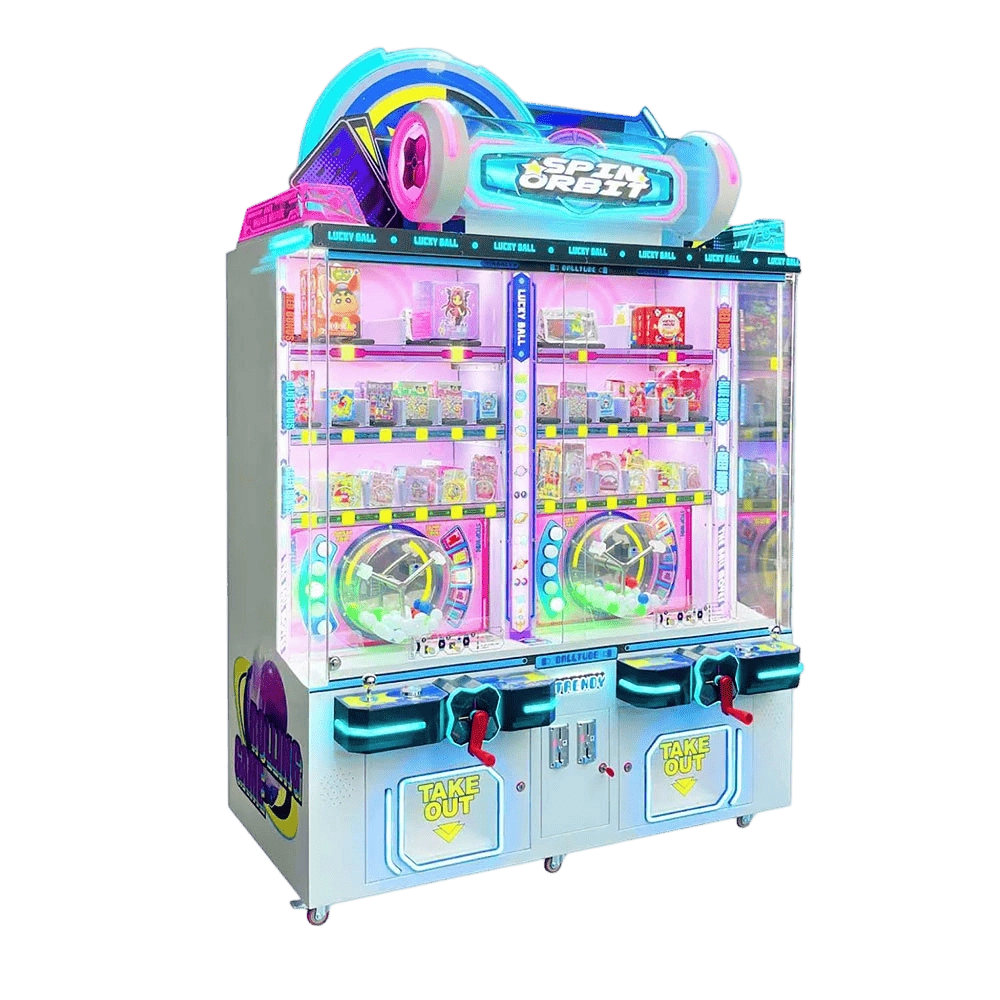
The SPIN ORBIT Lucky Prize Arcade Game is designed for 2 players, allowing simultaneous gameplay for added fun.
What types of customers does Jiami Games serve?
We serve a wide range of clients, including entertainment centers, shopping malls, theme parks, family entertainment venues, and arcade operators worldwide.
Where is this arcade game machine suitable for placement?
It is ideal for high-traffic locations such as children's playgrounds, family entertainment centers, amusement parks, shopping malls, cinemas, and tourist attractions.
You May Also Like
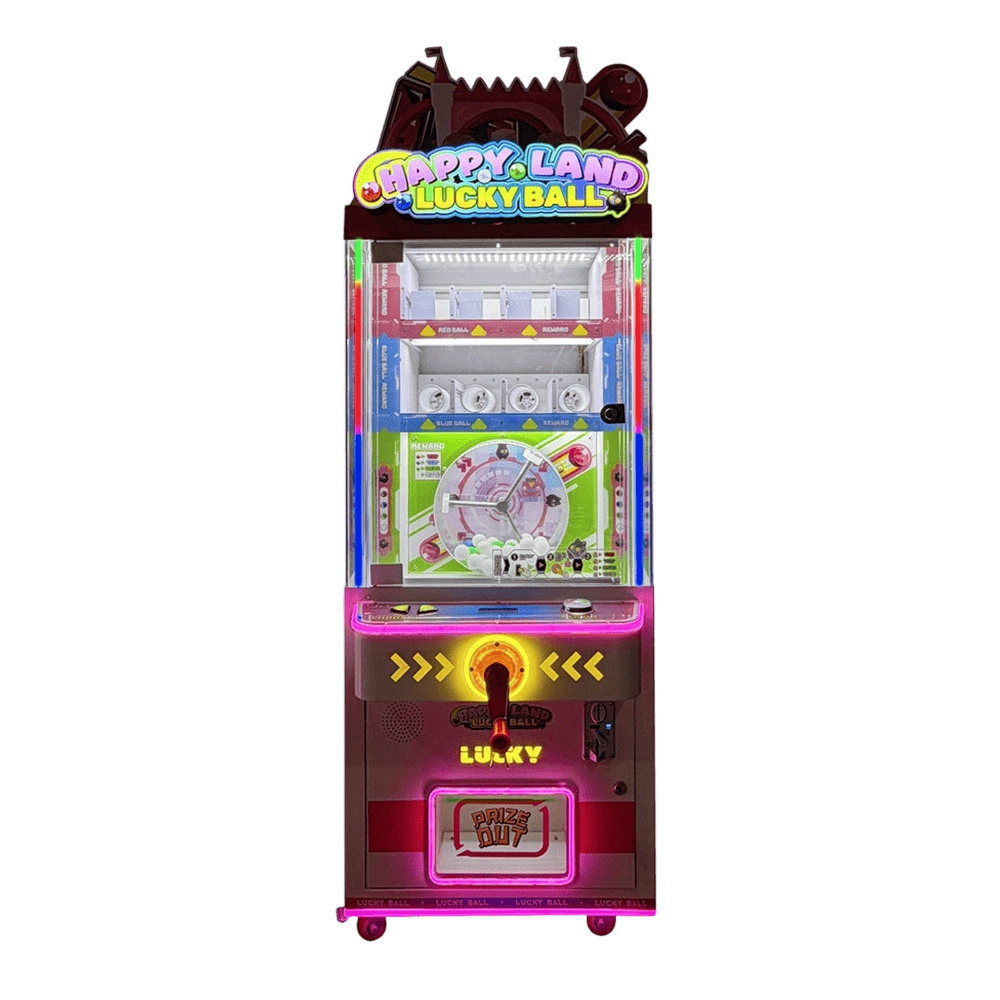
Coin Operated/Card Payment Lucky Ball Vending Toy Gift Arcade Game Machine
Coin Operated/Card Payment 2 Players SPIN ORBIT Lucky Prize Arcade Game
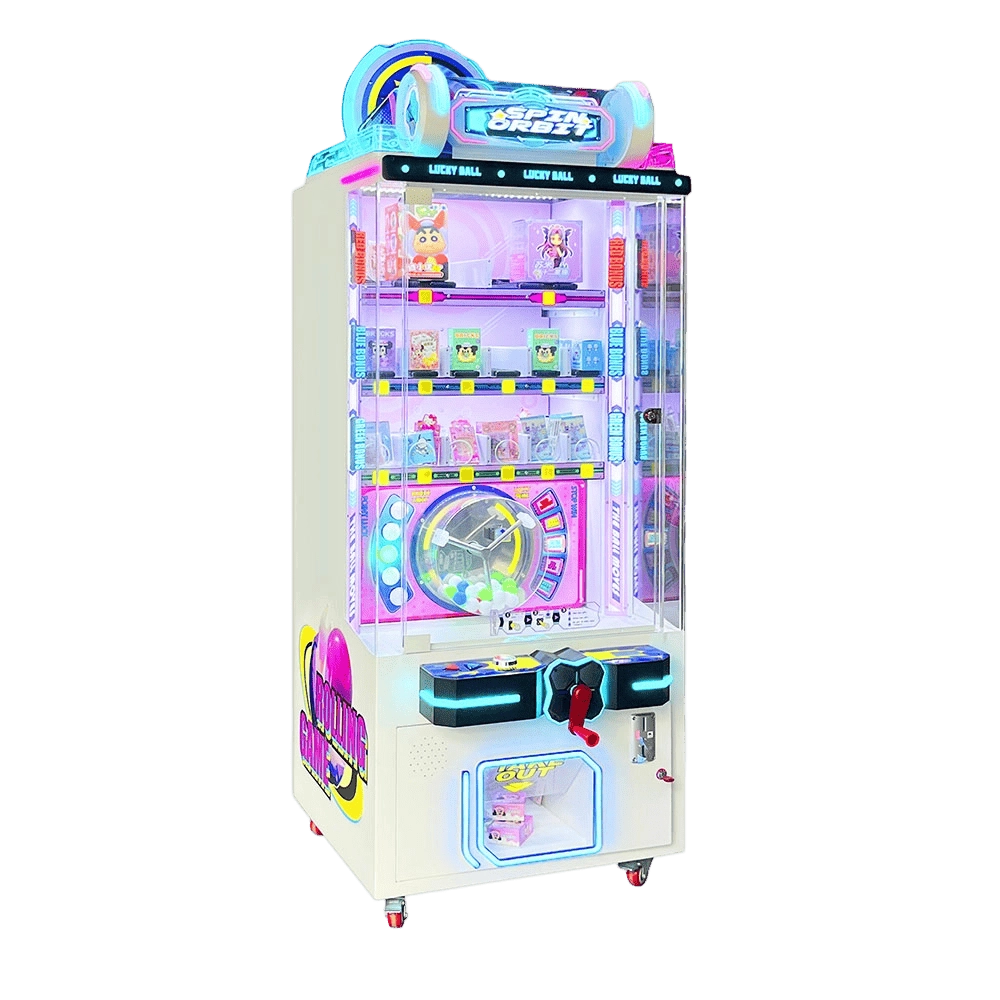
Coin Operated/Card Payment SPIN ORBIT Lucky Prize Arcade Game
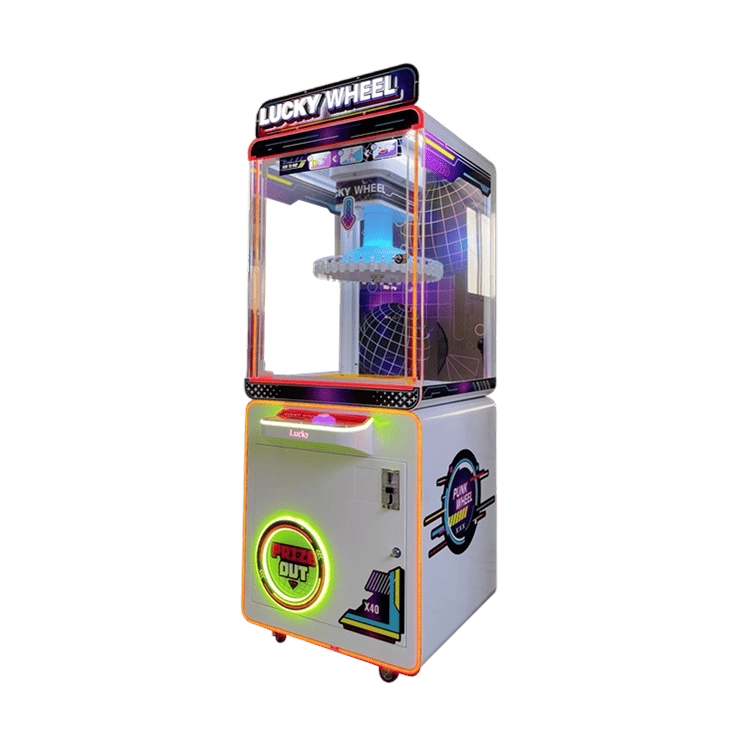
Arcade Prize Lucky Wheel Gift Machine For Amusement Areas
Get in Touch with Jiami Games
If you have any comments or good suggestions, please leave us a message; later our professional staff will contact you as soon as possible.

Innovative Entertainment, at Your Fingertips
Learn about Jiami Games and explore our expertise in console development, innovative design, and global markets.
Quick Links:
© 2026 Jiami Games.
Whatsapp: +8618520390438