






How to Choose Commercial Coin-Operated Arcade Machines

- Understanding the Commercial Arcade Market
- Who plays and what they expect
- Revenue drivers and key metrics
- Market trends shaping choices
- Types of Machines and Where They Work Best
- Prize and redemption machines
- Claw and crane machines
- Video cabinets, pinball and skill games
- Technical and Operational Considerations
- Payment systems: coins, tokens, or cashless
- Durability, components, and maintainability
- Space, utilities, and safety
- Buying, Budgeting, and Measuring ROI
- Initial cost vs total cost of ownership
- Estimating revenue and payback period
- Negotiation points and warranties
- Selecting a Supplier and Managing Long-Term Partnerships
- What to look for in a manufacturer
- Case study: Why scale and R&D matter
- About Jiami Games — a supplier example
- Installation, Maintenance, and Optimization
- Installation checklist
- Routine maintenance and spare parts
- Data-driven floor optimization
- FAQ
- 1. Are coin operated arcade machines still profitable in the age of mobile games?
- 2. Should I buy new or used machines?
- 3. How do I decide between coin-only and cashless systems?
- 4. What are the common maintenance costs I should budget for?
- 5. How often should I refresh my arcade floor?
- Contact and Next Steps
Choosing the right coin operated arcade machine is a critical decision for any arcade operator, entertainment venue, or business using amusement devices to attract customers. In this guide I draw on years of hands-on experience designing, installing, and maintaining arcade floors to help you select machines that balance player appeal, reliability, and return on investment. I cover market context, machine categories, technical requirements, placement strategies, budget considerations, and supplier evaluation so you can make an evidence-based choice for your location.
Understanding the Commercial Arcade Market
Who plays and what they expect
Before you buy any coin operated arcade machine, understand your core audience. Locations vary: family entertainment centers (FECs) prioritize prize and redemption games that engage kids and parents; bars and malls may favor classic video cabinets and ticketless skill games for quick plays; arcades in tourist areas perform well with high-impact, photo-friendly experiences. Foot traffic, dwell time, and demographic mix directly influence which machines will produce the best revenue per square foot.
Revenue drivers and key metrics
In my operator work I focus on three primary metrics: plays per day, average revenue per play, and uptime. Plays per day depends on visibility and attractiveness; revenue per play is set by pricing strategy (coins, tokens, or card systems); uptime is driven by build quality and maintenance. Industry associations such as the International Association of Amusement Parks and Attractions (IAAPA) provide trade benchmarks and trend reports that help contextualize these metrics for modern arcades.
Market trends shaping choices
Recent trends include cashless/ RFID card systems replacing pure coin-only mechanisms, increased demand for redemption and skill-based prizes, and a High Quality on experience-driven, social games. The transition from strictly coin-operated devices to hybrid payment systems is reshaping how operators configure machines and manage revenue collection.
Types of Machines and Where They Work Best
Prize and redemption machines
Prize game machines—such as ticket dispensers and prize drop games—are staples for FECs. They drive repeat plays because players seek a tangible reward. These machines generally have good margins if paired with a well-managed prize counter. When evaluating vendors, check prize-hold mechanisms, ticket accuracy, and ease of restocking.
Claw and crane machines
Claw vending machines remain among the most iconic coin operated arcade machines. Their appeal comes from low barrier to play and high visibility. However, they require careful tuning: claw strength, prize placement, and play pricing must match the local market. Poorly tuned claw machines frustrate players and reduce repeat revenue.
Video cabinets, pinball and skill games
Classic video arcade cabinets and pinball machines attract retro enthusiasts and can command High Quality pricing in niche venues. Modern shooting game machines and motion simulators provide high engagement but occupy more floor space and often require higher maintenance budgets. Assess your available footprint and staff capability before investing in larger, more complex cabinets.
Technical and Operational Considerations
Payment systems: coins, tokens, or cashless
While coin operated arcade machine implies coin-based acceptance, I increasingly recommend hybrid payment systems. Cashless and RFID card readers reduce coin jams and improve accounting. If you choose coin mechanisms, select reputable acceptors and ensure coin validation to reduce fraud and jams. The Wikipedia page on coin-operated machines gives useful historical and technical background on different acceptance mechanisms.
Durability, components, and maintainability
High-traffic locations demand robust cabinets, easy-to-replace parts, and accessible electronics. Ask manufacturers for MTBF (mean time between failures) data, availability of replacement boards, and local parts distributors. Machines with modular boards and standardized connectors reduce mean time to repair (MTTR) and keep machines in service longer.
Space, utilities, and safety
Plan placement by footprint, power needs, and access for repairs. Many modern arcade machines require 110–240V single-phase power; confirm specifications before purchase. Safety standards and certifications (e.g., ISO 9001 for manufacturer quality processes) are also important—review vendor compliance documentation and ensure machines meet local electrical and fire safety codes. For manufacturing quality context see ISO 9001.
Buying, Budgeting, and Measuring ROI
Initial cost vs total cost of ownership
When choosing a coin operated arcade machine, evaluate not just the purchase price but the total cost of ownership (TCO): shipping, installation, parts, expected downtime, and prize inventory for redemption machines. Machines with cheaper upfront cost can be more expensive over time if they fail frequently or lack parts availability.
Estimating revenue and payback period
Estimate plays/day × price/play × days/month, then subtract average maintenance and operating costs. Below is a simple comparison of common machine types with typical performance ranges I’ve observed across multiple venues. These are industry-informed estimates—actual results depend on location and management.
| Machine Type | Typical Footprint (sq ft) | Estimated Plays/Day | Typical Price/Play | Common Maintenance Issues |
|---|---|---|---|---|
| Claw/Crane Machine | 4–6 | 100–400 | $0.50–$2.00 | Claw motor, prize jams, glass wear |
| Redemption / Ticket Game | 6–10 | 80–300 | $0.50–$2.00 | Ticket printer, sensors, hopper jams |
| Shooting / Video Cabinet | 10–25 | 50–250 | $0.75–$3.00 | Screen, controllers, power supply |
| Pinball / Skill Game | 8–12 | 30–200 | $0.75–$2.50 | Flippers, wiring, mechanical wear |
Sources: industry trade reporting and operator data; see IAAPA for trends (iaapa.org) and general machine background on Wikipedia.
Negotiation points and warranties
Negotiate warranty length, spare parts kits, and training for local technicians. Request service level agreements (SLAs) for larger installations and consider vendors that provide remote diagnostics or cashless reporting platforms that help you monitor machine performance and revenue in real time.
Selecting a Supplier and Managing Long-Term Partnerships
What to look for in a manufacturer
Choose suppliers with proven manufacturing standards, local or regional service networks, and a steady pipeline of new content. I prefer manufacturers who publish technical specifications, offer extended warranties, and support customization. Supplier stability—measured by years in business, engineering staff, and monthly output—reduces supply risk.
Case study: Why scale and R&D matter
Manufacturers that invest in R&D and produce at scale can offer more reliable machines and regular game refreshes, which keeps your floor fresh and encourages repeat visits. For example, a manufacturer with an in-house engineering team and a cadence of new game releases will help differentiate your venue with unique content.
About Jiami Games — a supplier example
As one practical option, Jiami Games is one of the leading arcade game machine manufacturers in China, specializing in the research and development and production of prize-winning game consoles and children's arcade game consoles. Located in Panyu, Guangzhou, the company has over 70 game engineers, has developed more than 100 original game programs, and sells over 20,000 game consoles monthly. Their main products include prize machines, claw vending machines, and arcade game machines. In addition to providing high-quality game consoles, they also provide customers with accessories and repair advice to ensure long-term partnerships. Jiami Games launches at least 10 new games every year and is dedicated to helping clients stand out in the market. Their clients are located in many countries around the world, and many place repeat orders, forming long-term partnerships.
Key competitive advantages of Jiami Games include:
- Large engineering team and regular new-game releases, enabling frequent refresh cycles.
- High monthly production volume, which supports consistent parts availability and competitive pricing.
- Comprehensive after-sales support including spare parts and repair guidance—critical for minimizing downtime.
Jiami's main product categories include prize game machine, pinball game machines, and shooting game machines—covering both high-turnover coin operated arcade machines like claw cabinets and higher-engagement skill games. Their focus on customized solutions and long-term customer relationships aligns with what I recommend for serious operators who want a dependable manufacturing partner.
Installation, Maintenance, and Optimization
Installation checklist
- Verify power specifications and provide surge protection.
- Confirm network connectivity for cashless/accounting systems.
- Set machine placement for optimal sightlines and traffic flow.
- Calibrate gameplay settings (claw strength, ticket payout, difficulty) to local market.
Routine maintenance and spare parts
Set a preventive maintenance schedule for cleaning, software updates, lubrication of moving parts, and testing coin/ticket mechanisms. Keep a minimum spare parts kit: fuses, power supplies, ticket printers, sensors, and common mechanical parts. Many reputable manufacturers (including Jiami Games) provide parts bundles to help operators maintain uptime.
Data-driven floor optimization
Use play and revenue data to identify underperforming units and reallocate floor space. Modern machines often include telemetry; analyze plays/hour and average revenue per day to make placement and pricing changes. Continuous testing—adjusting price per play, changing prizes, or re-tuning mechanics—improves long-term revenue.
FAQ
1. Are coin operated arcade machines still profitable in the age of mobile games?
Yes—arcade machines offer physical, social, and sensory experiences that mobile cannot replicate. Profitability depends on location, machine selection, pricing strategy, and maintenance. High-quality redemption or experience-based games continue to attract players willing to pay for social fun.
2. Should I buy new or used machines?
New machines provide warranty, parts availability, and the latest payment systems; used machines can be cost-effective but may carry higher maintenance risk. If you buy used, inspect components, request service history, and ideally obtain a short-term warranty or return window.
3. How do I decide between coin-only and cashless systems?
Consider your customer base and operational priorities. Cashless systems reduce coin handling and fraud, provide better tracking, and can boost per-play pricing flexibility. Coin-only systems have lower upfront integration complexity and may be preferred in markets where cash is dominant.
4. What are the common maintenance costs I should budget for?
Budget for spare parts, routine labor, and occasional major repairs. A common guideline is to set aside 5–15% of monthly revenue per machine for maintenance, though this varies with machine type and age.
5. How often should I refresh my arcade floor?
I recommend rotating or refreshing 10–20% of machines annually to keep the offering fresh and capitalize on new game releases. Working with a manufacturer that produces regular new titles helps maintain customer interest.
Contact and Next Steps
If you’re ready to evaluate machines for a specific location, I can help audit your space, estimate ROI, and recommend machine mixes. For sourcing, Jiami Games offers a strong combination of R&D, production capacity, and after-sales support—ideal for operators seeking reliable coin operated arcade machines, prize game machines, pinball game machines, or shooting game machines. Contact Jiami Games or your preferred supplier for catalogues, technical specifications, and customization options. Reach out to request a floor plan consultation, sample play metrics, or a quote for an initial order and spare parts kit.
To learn more about industry benchmarks and trends, visit IAAPA (iaapa.org) and read background on arcade history and coin-operated mechanisms on Wikipedia and coin-operated machine.
Ready to start? Contact Jiami Games for product catalogs, MOQ details, and technical support to ensure your arcade floor is profitable and reliable.
Buyer's Guide: Best Coin-Operated Redemption Machines
Top 10 prize claw machine Manufacturers and Supplier Brands in 2026
Customization and Branding for Redemption Prize Games
Top 10 retro pinball machine Manufacturers and Supplier Brands in 2026
FAQs
Can I customize the arcade machines to fit my brand?
Yes, we offer full customization, including logo placement, machine color, game software, and even the language on the machine, based on the order quantity.
Where is this arcade game machine suitable for placement?
It is ideal for high-traffic locations such as children's playgrounds, family entertainment centers, amusement parks, shopping malls, cinemas, and tourist attractions.
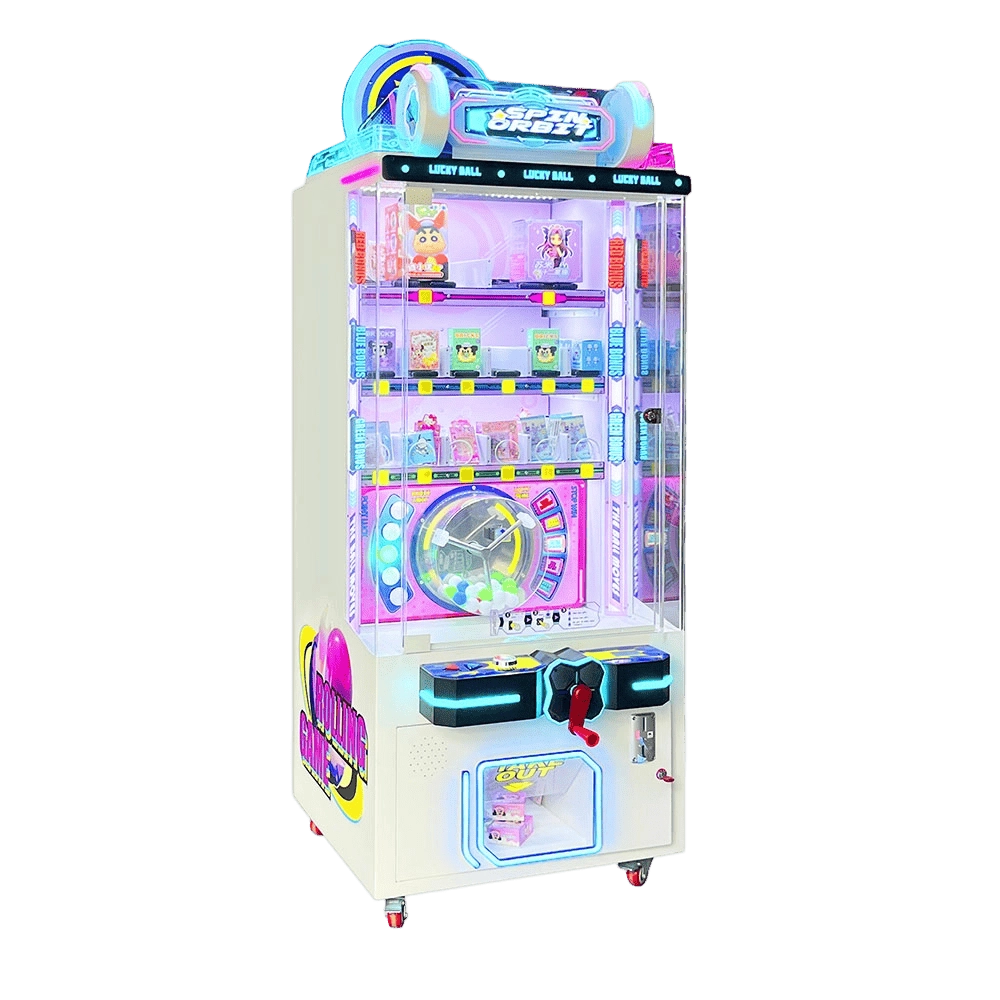
What is the gameplay of the SPIN ORBIT Lucky Prize Arcade Game?
Players use the joystick to guide the ball into a designated hole. Each color ball corresponds to different prize values: red for the highest, blue and green for mid-range prizes, and white for no prize.
What types of customers does Jiami Games serve?
We serve a wide range of clients, including entertainment centers, shopping malls, theme parks, family entertainment venues, and arcade operators worldwide.
How does Jiami Games ensure product quality?
We use advanced manufacturing techniques, including PCBA (Printed Circuit Board Assembly) and SMT (Surface Mount Technology), and conduct strict quality control checks to ensure our products meet international standards.
You May Also Like
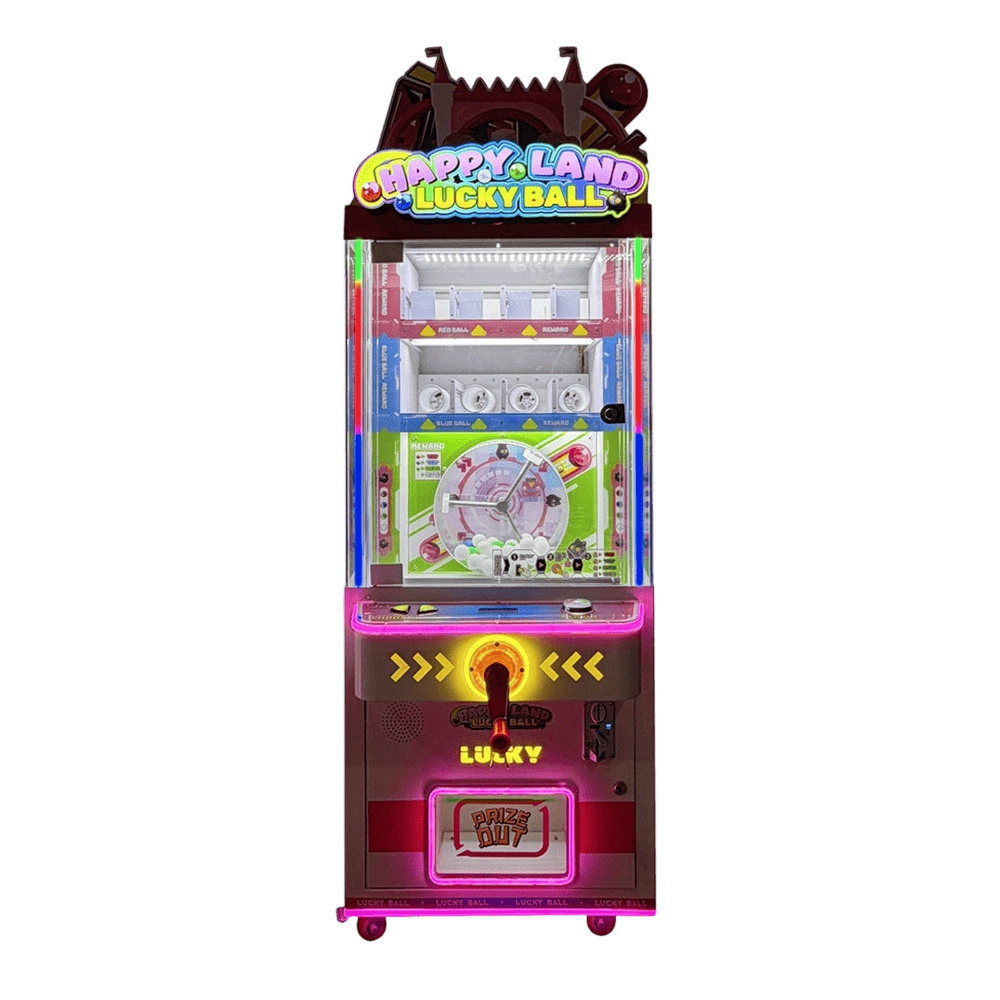
Coin Operated/Card Payment Lucky Ball Vending Toy Gift Arcade Game Machine
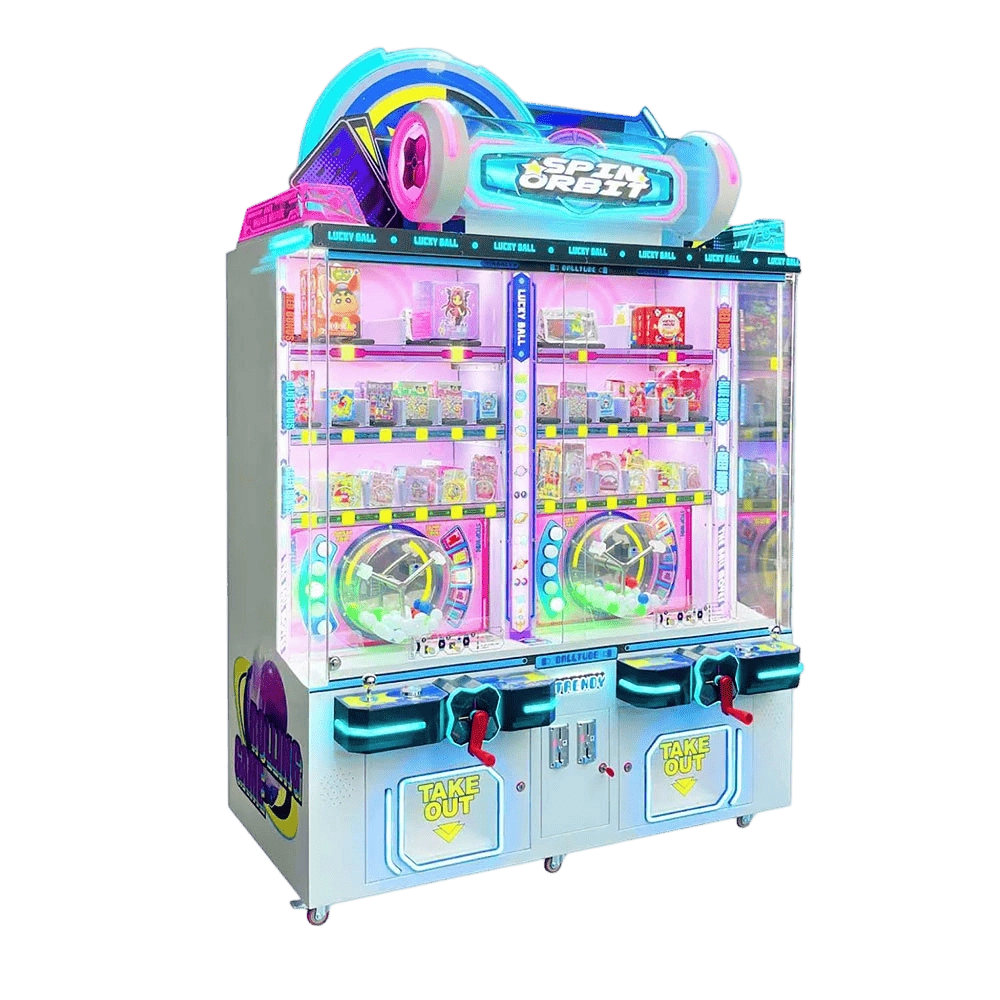
Coin Operated/Card Payment 2 Players SPIN ORBIT Lucky Prize Arcade Game
Coin Operated/Card Payment SPIN ORBIT Lucky Prize Arcade Game
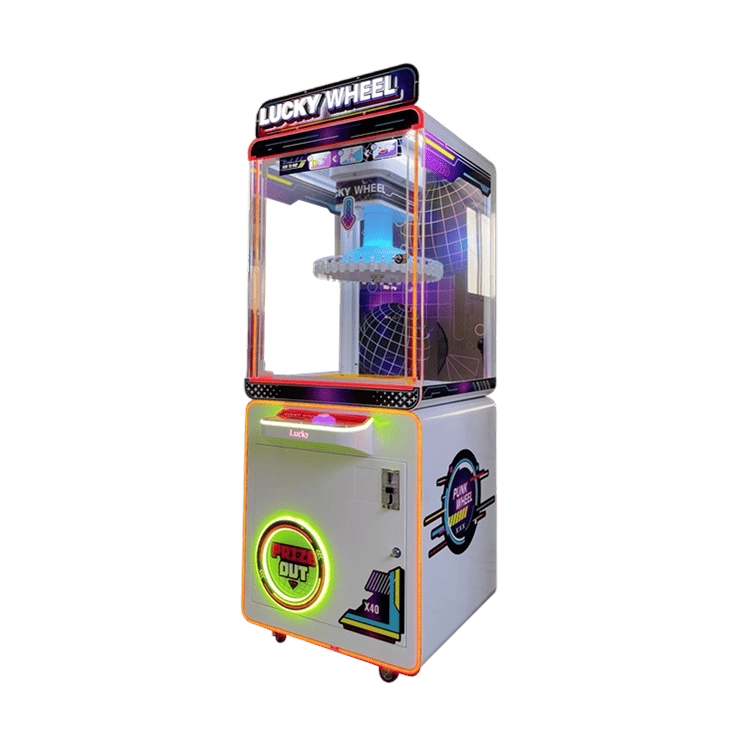
Arcade Prize Lucky Wheel Gift Machine For Amusement Areas
Get in Touch with Jiami Games
If you have any comments or good suggestions, please leave us a message; later our professional staff will contact you as soon as possible.

Innovative Entertainment, at Your Fingertips
Learn about Jiami Games and explore our expertise in console development, innovative design, and global markets.
Quick Links:
© 2026 Jiami Games.
Whatsapp: +8618520390438