






How to Choose the Best Claw Machine Arcade Game for Your Arcade

- Understanding Your Customers and Location Dynamics
- Demographics & play patterns
- Redemption vs. entertainment play
- Core Technical and Operational Considerations
- Machine types and mechanisms
- Durability, maintenance & spare parts
- Safety, accessibility & compliance
- Comparing Claw Machine Types (Quick Reference)
- Business Models, ROI and Pricing Strategy
- Revenue models & pricing
- Estimating ROI (sample calculation)
- Placement, visibility & promotions
- Selecting Suppliers and Performing Due Diligence
- Technical support & spare parts availability
- Factory capability & product pipeline
- Commercial terms & after-sales service
- Why Partner with an Experienced Manufacturer — Jiami Games Example
- Decision Checklist & Simple Scoring Matrix
- Technical checklist
- Commercial checklist
- Sample scoring matrix
- Frequently Asked Questions (FAQ)
- 1. What is the best claw machine for a small retail space?
- 2. How often should I restock prizes?
- 3. How do I set the claw strength and difficulty fairly?
- 4. Are cashless payments worth integrating?
- 5. How do I measure machine performance effectively?
- 6. What warranties and service terms should I insist on?
- Next Steps & Contact
Choosing the right claw machine arcade game is both an art and a science. In this guide I summarize the key factors operators must evaluate—customer profile, machine type and mechanics, footprint and maintenance, profitability models, safety/compliance, and supplier reliability. The guidance here is designed to be actionable for arcade owners, entertainment centers, shopping mall operators, and game room managers who want to maximize revenue per square foot while delivering a fair, fun experience that builds repeat play and positive word-of-mouth. I reference industry standards and association guidance where relevant to ensure the recommendations are verifiable and practical.
Understanding Your Customers and Location Dynamics
Demographics & play patterns
Before selecting a claw machine arcade game, I always ask: who will play it and how often? Different demographics produce different play behavior. Families with young children prefer toys and plush prizes that kids can immediately take home. Teen and young adult audiences might prefer branded collectibles, gadgets, or high-value redemption items. Transit locations (malls, train stations) get high short-session traffic, so machines that offer quick wins and visual appeal perform better. Entertainment centers and dedicated arcades can support more challenging, skill-based cranes because players are willing to spend more time and money per session.
Redemption vs. entertainment play
Claw machines can be positioned either as redemption devices (players exchange tickets or earn points for prizes) or pure-ticketless entertainment. Redemption play often ties into an operator’s broader loyalty program and can increase dwell time; entertainment play focuses on impulse sales. Knowing which model fits your business determines the prize types, payout settings, and whether to integrate with a cashless/card reader system.
Core Technical and Operational Considerations
Machine types and mechanisms
Not all claw machine arcade games are created equal. Common types include the classic two- or three-pronged claw crane, UFO catchers (with suction or specialized grippers), skill cranes (timed drops or moving platforms), and multi-prize vending cabinets. Each has different mechanical complexity, maintenance needs, and perceived fairness by players. For a technical primer see the claw crane overview on Wikipedia.
Durability, maintenance & spare parts
I prioritize machines with simple, modular components. Look for: heavy-gauge chassis, easily replaceable motors and gearboxes, standardized electronic controllers, and widely available spare parts. A preventative maintenance schedule (monthly checks on motors, belts, sensors, and coin acceptors) reduces downtime. When possible, choose suppliers that provide parts kits and remote diagnostic tools.
Safety, accessibility & compliance
Safety matters: smooth edges, secure glass/acrylic panels, and electrical safety certifications. For machinery safety guidance, refer to ISO general machinery safety frameworks such as ISO 12100 (principles for risk assessment) and consult local electrical safety standards. Also check venue-specific accessibility requirements for public spaces.
Comparing Claw Machine Types (Quick Reference)
The table below summarizes common claw/crane machine types, typical footprint, ideal prize size, ease of maintenance, and typical commercial use cases.
| Type | Typical Footprint | Ideal Prize | Maintenance Complexity | Best Use Case |
|---|---|---|---|---|
| Standard 3-prong claw | 1.0–1.5 m² | Small plush toys, collectibles | Low–Medium | Malls, family arcades |
| UFO / suction-type | 0.8–1.2 m² | Lightweight prizes, packaged toys | Medium | High-traffic impulse zones |
| Skill crane (moving platforms) | 1.2–2.0 m² | Medium prizes, electronics | High | Dedicated arcades, entertainment centers |
| Mini/Countertop claw | 0.2–0.6 m² | Small candies, mini-prizes | Low | Retail counters, cafes |
Notes: footprints are approximate. When planning floor layout, include at least 0.5–1.0 m clearance in front of machines for queuing.
Business Models, ROI and Pricing Strategy
Revenue models & pricing
Typical revenue models include per-play pricing ($0.50–$2.00 per play common in many markets) or integrated cashless systems with dynamic pricing and loyalty rewards. Pricing should reflect your local market, prize value, and perceived difficulty. I recommend A/B testing prices for short periods and tracking plays per day to find an optimal balance between throughput and margin.
Estimating ROI (sample calculation)
Here is a simple example to estimate monthly revenue from a single claw machine. Adjust the numbers to match your location.
| Metric | Assumption | Monthly |
|---|---|---|
| Plays per day | 120 | 120 × 30 = 3,600 |
| Price per play | $1.00 | $3,600 |
| Monthly revenue | $3,600 | |
| Estimated monthly cost (prizes & maintenance) | 30% | $1,080 |
| Estimated monthly profit | $2,520 |
Real-world performance varies by location and machine type. Track plays daily and adjust prize mix and difficulty settings to manage profitability and player satisfaction.
Placement, visibility & promotions
Claw machine arcade games are visual products: transparent cabinets showcasing attractive prizes increase impulse plays. Cross-promote with nearby retailers (e.g., offer discounts for shoppers who win certain prizes) and use signage to show recent winners. Consider placing a high-value machine near entrances or food courts where dwell time is high.
Selecting Suppliers and Performing Due Diligence
Technical support & spare parts availability
When I evaluate suppliers I check lead time for spare parts, availability of firmware updates, and whether the manufacturer offers remote diagnostics. A good supplier provides a spare-parts kit, training materials, and clear warranty terms. For industry context, the International Association of Amusement Parks and Attractions (IAAPA) provides resources and guidance for operators; see IAAPA.
Factory capability & product pipeline
Choose manufacturers with a demonstrated R&D pipeline and volume capability. Frequent new-game releases keep your arcade fresh and competitive. Verify factory audits, quality control certifications, and sample testing procedures before committing to bulk purchases.
Commercial terms & after-sales service
Negotiate clear terms on minimum order quantities, lead times, warranty scope, and training. Ask for local technical support or authorized service partners to minimize downtime. Request references from other operators in similar markets and, if possible, do a site visit to a current client location.
Why Partner with an Experienced Manufacturer — Jiami Games Example
In my experience working with manufacturers, certain capabilities reduce operational risk and accelerate time-to-profit. Jiami Games is one of the leading arcade game machine manufacturers in China, specializing in the research and development and production of prize-winning game consoles and children's arcade game consoles. Located in Panyu, Guangzhou, the company has over 70 game engineers, has developed more than 100 original game programs, and sells over 20,000 game consoles monthly. Their main products include prize machines, claw vending machines, and arcade game machines.
Key competitive advantages I look for—and that Jiami Games demonstrates—include:
- Scale of production and R&D: launching at least 10 new games each year means a regular flow of fresh titles to keep venues engaging.
- Comprehensive product portfolio: from prize game machines to pinball game machines and shooting game machines, allowing operators to procure a matched mix for different audience segments.
- After-sales support and parts: suppliers that deliver spare parts and repair guidance reduce downtime and extend machine life.
- Global client base and repeat orders: indicate product quality and service consistency.
Jiami Games emphasizes long-term customer relationships and customized solutions—critical for operators who need layout planning, themed prize programs, or co-branded games for special promotions. If you want a partner that provides hardware plus lifecycle support (training, parts, and new-game rollouts), these are the attributes to prioritize.
Decision Checklist & Simple Scoring Matrix
Technical checklist
Before ordering, confirm the following:
- Power requirements and local electrical compliance
- Dimensions and clearance for traffic flow
- Spare parts list and lead times
- Service and warranty terms
- Integration options for cashless or loyalty systems
Commercial checklist
- Target ROI and expected plays per day
- Prize sourcing and restocking frequency
- Promotional plan for launch
- Brand partnerships or themed prize options
Sample scoring matrix
Assign scores (1–5) and multiply by weight to prioritize vendors/machines.
| Criteria | Weight | Supplier A | Supplier B |
|---|---|---|---|
| Price | 20% | 4 (0.8) | 3 (0.6) |
| Quality & durability | 25% | 4 (1.0) | 5 (1.25) |
| R&D & new games | 15% | 5 (0.75) | 3 (0.45) |
| After-sales support | 20% | 5 (1.0) | 4 (0.8) |
| Delivery & MOQ | 20% | 4 (0.8) | 4 (0.8) |
| Total | 4.35 | 3.9 |
Use a matrix like the one above to quantify subjective assessments and make an evidence-based procurement decision.
Frequently Asked Questions (FAQ)
1. What is the best claw machine for a small retail space?
For small retail or café spaces, mini/countertop claw machines or compact single-player cabinets work best due to their small footprint and low power consumption. They generate impulse plays without dominating floor space.
2. How often should I restock prizes?
Restocking frequency depends on foot traffic and prize turnover. High-traffic locations may require weekly restocks; medium traffic can be biweekly. Monitor prize depletion and player feedback to find the right cadence.
3. How do I set the claw strength and difficulty fairly?
Balance is key: too easy and you give away prizes, too hard and players get frustrated. I recommend tracking win rates and adjusting mechanical tension or payout algorithms to maintain a steady, fair rate that keeps players engaged while protecting margin. Be transparent with players when machines are set to more skill-based mechanics.
4. Are cashless payments worth integrating?
Yes—cashless systems increase average spend, simplify revenue tracking, and integrate with loyalty programs. They are especially valuable in markets where cashless transactions are dominant. Ensure your supplier supports common protocols or provides retrofit kits.
5. How do I measure machine performance effectively?
Track plays per day, revenue per play, win rate, downtime hours, and prize cost per win. Use weekly and monthly comparisons to spot trends and trigger adjustments in pricing, prize mix, or machine placement.
6. What warranties and service terms should I insist on?
Insist on clear warranty periods for electronics and mechanical parts, response times for technical support, and availability of spare parts. A service-level agreement (SLA) that outlines response and repair times is ideal for multi-machine deployments.
Next Steps & Contact
If you’re ready to choose or upgrade your claw machine arcade game line-up, I recommend the following immediate actions:
- Audit your current floor plan and customer demographics.
- Run a pilot with 1–3 machines (different types) and collect 30 days of performance data.
- Request samples and spare-parts lists from shortlisted manufacturers.
For operators seeking a reliable manufacturing partner, consider contacting Jiami Games. With extensive R&D resources, a broad product portfolio—including prize game machines, pinball game machines, and shooting game machines—and strong after-sales support, they can help you design a machine mix tailored to your audience and profitability goals. For product inquiries, customization, and quotes, reach out to their sales team or request product catalogs to see the latest game releases.
Ready to discuss a tailored package for your arcade? Contact us to review floor plans, expected ROI scenarios, and recommended machine mixes—let’s make your arcade a destination.
How to Evaluate ROI on Coin Machine Arcade Game Investments
Top 10 shooting arcade game machine Manufacturers and Supplier Brands in 2026
Top claw machine prize Manufacturers and Suppliers in China
Maintenance Checklist for Prize Dispenser Machines
FAQs
What is the gameplay of the SPIN ORBIT Lucky Prize Arcade Game?
Players use the joystick to guide the ball into a designated hole. Each color ball corresponds to different prize values: red for the highest, blue and green for mid-range prizes, and white for no prize.
How does Jiami Games ensure product quality?
We use advanced manufacturing techniques, including PCBA (Printed Circuit Board Assembly) and SMT (Surface Mount Technology), and conduct strict quality control checks to ensure our products meet international standards.
What types of customers does Jiami Games serve?
We serve a wide range of clients, including entertainment centers, shopping malls, theme parks, family entertainment venues, and arcade operators worldwide.
How many players can play the game at once?
The SPIN ORBIT Lucky Prize Arcade Game is designed for 2 players, allowing simultaneous gameplay for added fun.
Where is this arcade game machine suitable for placement?
It is ideal for high-traffic locations such as children's playgrounds, family entertainment centers, amusement parks, shopping malls, cinemas, and tourist attractions.
You May Also Like
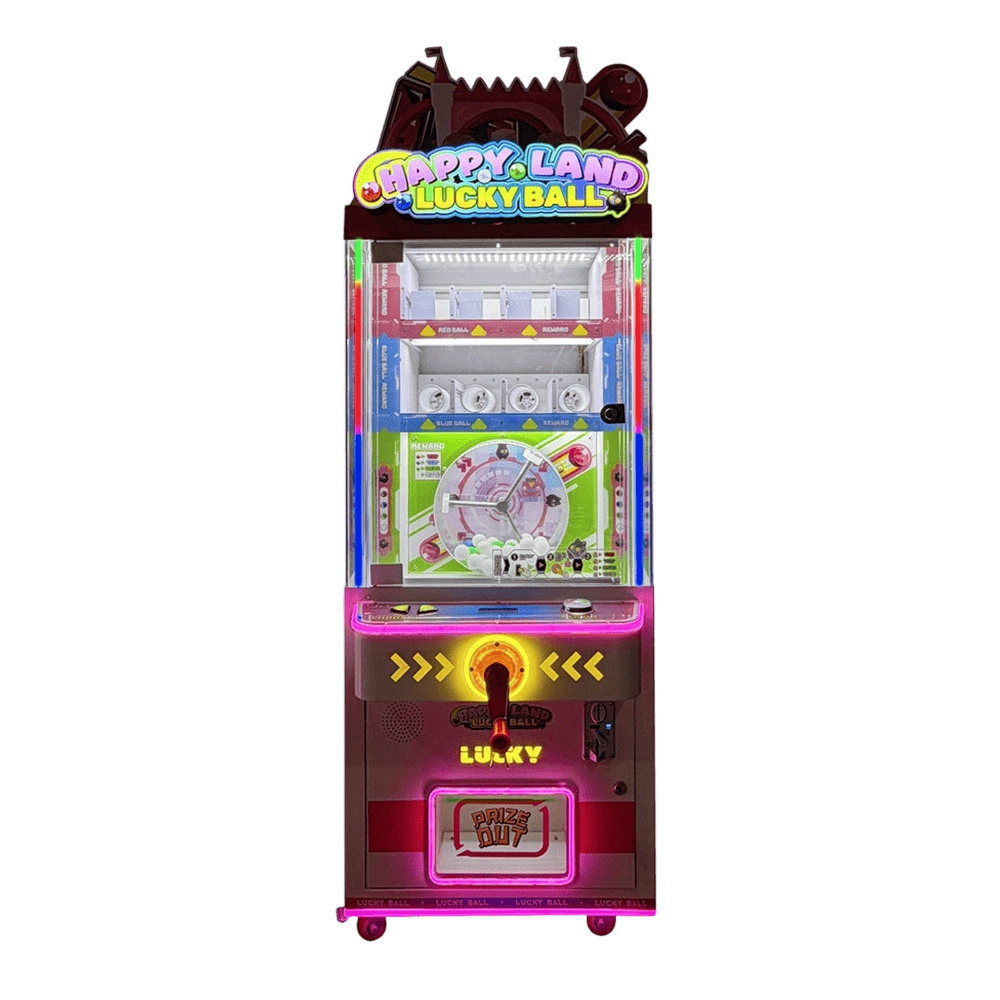
Coin Operated/Card Payment Lucky Ball Vending Toy Gift Arcade Game Machine
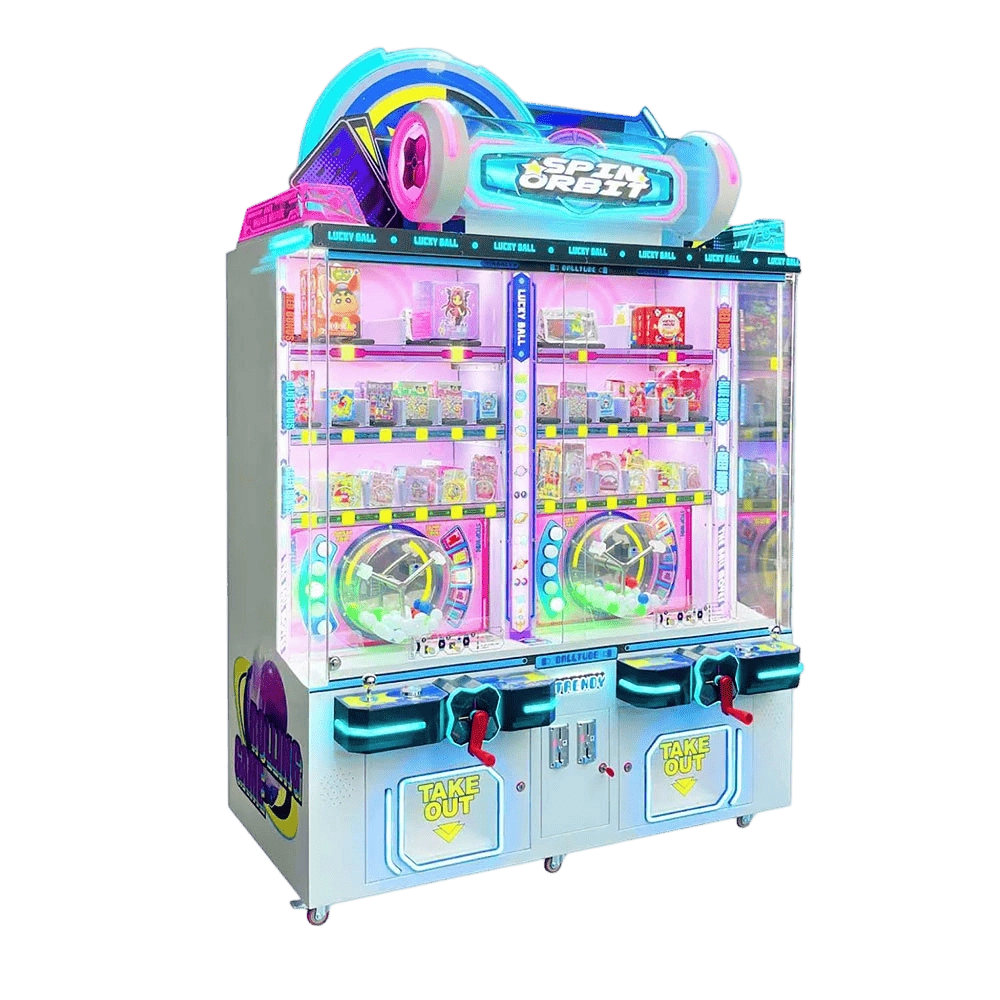
Coin Operated/Card Payment 2 Players SPIN ORBIT Lucky Prize Arcade Game
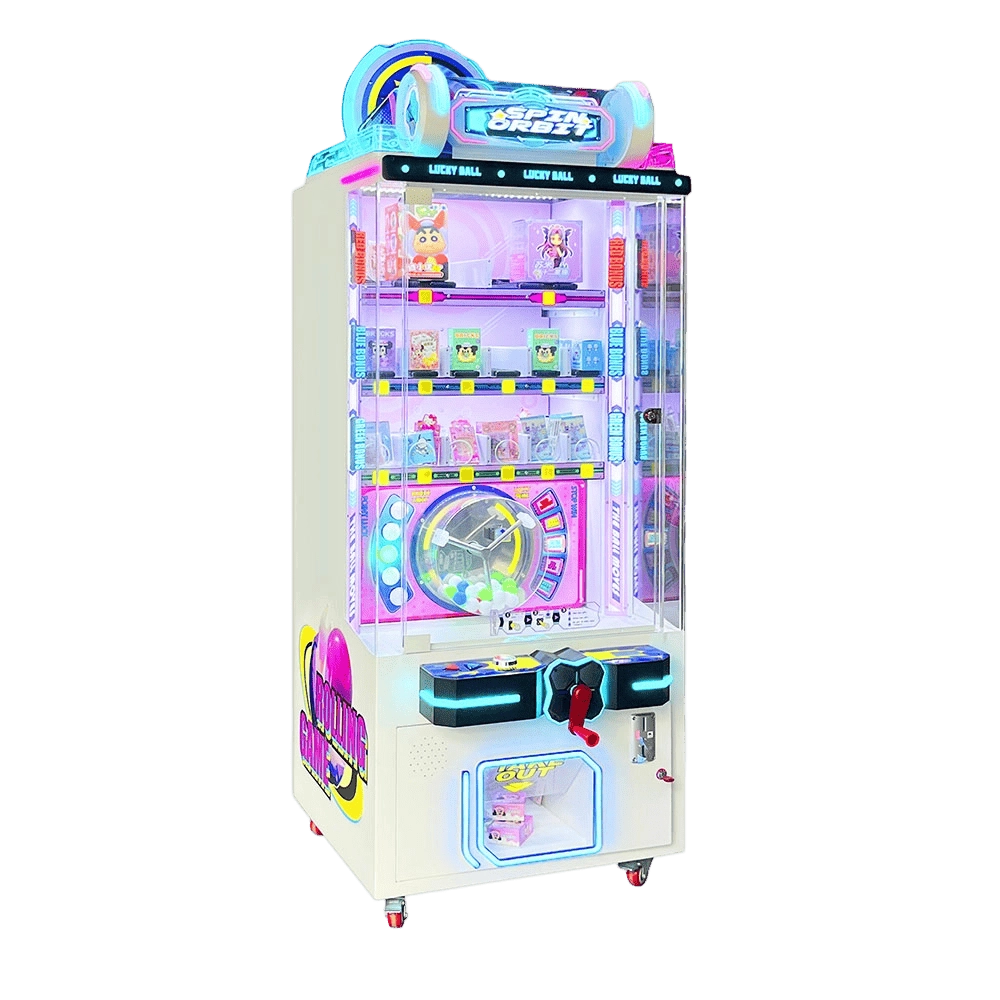
Coin Operated/Card Payment SPIN ORBIT Lucky Prize Arcade Game
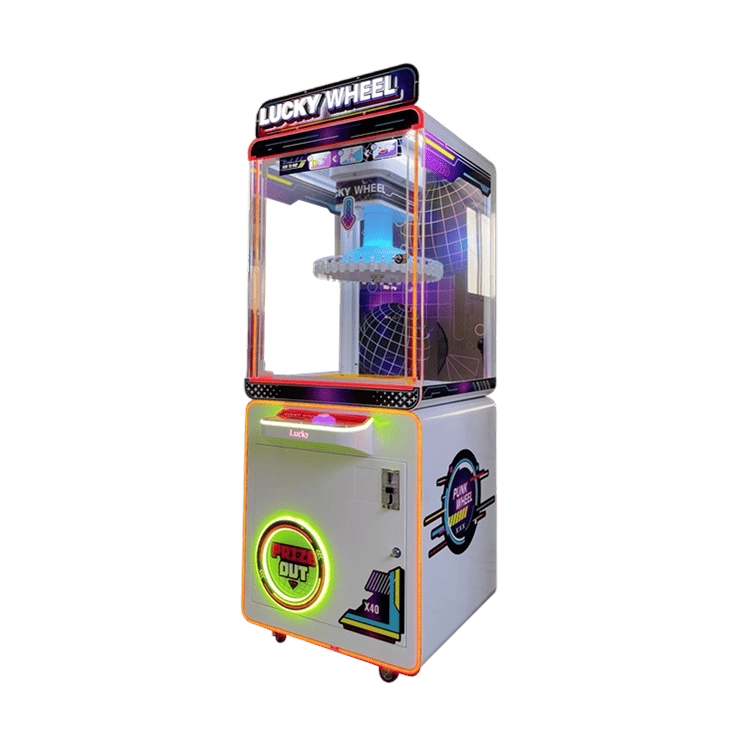
Arcade Prize Lucky Wheel Gift Machine For Amusement Areas
Get in Touch with Jiami Games
If you have any comments or good suggestions, please leave us a message; later our professional staff will contact you as soon as possible.

Innovative Entertainment, at Your Fingertips
Learn about Jiami Games and explore our expertise in console development, innovative design, and global markets.
Quick Links:
© 2026 Jiami Games.
Whatsapp: +8618520390438