






Cashless vs Coin Operated Arcade Machines: Buyer Tips

- Understanding payment models and why they matter
- What I mean by coin operated vs cashless
- Why the payment model affects operations and revenue
- Industry trend context
- Operational comparison: what I look for as a buyer
- Upfront purchase and installation costs
- Ongoing costs: cash handling vs subscription fees
- Security and shrinkage
- Player behavior, revenue, and analytics
- How payment mode changes spend patterns
- Data and analytics for optimization
- Accessibility and demographics
- Technical and maintenance considerations
- Maintenance differences I encounter
- Integration and retrofit options
- Compliance, certifications, and standards
- Side-by-side comparison table
- Buyer tips and checklist I use with clients
- 1. Run a pilot and measure KPIs
- 2. Calculate multi-year TCO
- 3. Demand vendor transparency on fees and support
- 4. Verify compliance and data handling
- 5. Confirm retrofit and upgrade paths
- Choosing suppliers: why manufacturer quality matters
- What I look for in a manufacturer
- Case example: Jiami Games — strengths to consider
- Why this matters for buyers
- Implementation roadmap I recommend
- Phase 1 — Assessment and pilot
- Phase 2 — Analysis and decision
- Phase 3 — Rollout and optimization
- Frequently Asked Questions (FAQ)
- 1. Will switching to cashless always increase my revenue?
- 2. Can I retrofit existing coin operated arcade machines with cashless readers?
- 3. What are the hidden costs of cashless systems?
- 4. How do I handle security and compliance for cashless payments?
- 5. Which payment model is better for small, retro arcades?
- 6. How quickly can I expect ROI from a cashless rollout?
I often get asked by operators and buyers whether to invest in traditional coin operated arcade machines or move to cashless systems. In this article I share practical buyer tips based on industry experience, operational metrics, and vendor selection criteria. I address upfront and lifecycle costs, impact on revenue and player behavior, maintenance and security implications, regulatory and accessibility considerations, and how to evaluate suppliers. I also compare the two payment models in a clear table so you can make a data-driven decision for your location.
Understanding payment models and why they matter
What I mean by coin operated vs cashless
By coin operated arcade machines I refer to arcade cabinets, prize machines, and redemption games that accept coins or tokens via a mechanical or electronic coin acceptor. By cashless I mean systems that accept card, mobile NFC, QR code, or RFID card-based credits managed through a kiosk or back-office network that communicates with machines.
Why the payment model affects operations and revenue
The payment mechanism is not just a convenience feature — it changes cash handling workflows, shrinkage risk, accounting, average spend per player, and even machine design. My experience across retail, family entertainment centers, and standalone arcades shows that the payment model will influence staffing needs, maintenance cadence, and player throughput.
Industry trend context
Macro trends toward cashless payments are well documented. The shift to less cash usage is discussed in the cashless society literature and makes its way into leisure sectors. See a general overview at Wikipedia: Cashless society. The amusement industry association also publishes trend insights emphasizing cashless adoption; operators should watch International Association of Amusement Parks and Attractions resources: IAAPA.
Operational comparison: what I look for as a buyer
Upfront purchase and installation costs
When advising buyers, I separate purchase price from installation and integration costs. Coin operated arcade machines often have a lower hardware cost because the payment mechanism is simpler. Cashless-capable machines (or retrofitted coin machines) require card readers, kiosks, network connectivity, and sometimes subscription fees for back-office software. Factor in the cost of reliable networking and spare parts when comparing quotes.
Ongoing costs: cash handling vs subscription fees
Coin systems shift costs into cash handling: counting, secure transport, and reconciliation. Cashless systems often introduce SaaS or transaction fees. I recommend calculating a multi-year TCO (total cost of ownership) over 3–5 years to compare. Include labor for cash collection, armored pick-up fees (if applicable), payment gateway fees, and hardware maintenance.
Security and shrinkage
Physical coins are vulnerable to theft and illegal tampering with coin mech devices. Cashless reduces physical shrinkage but introduces cyber and fraud risks — stolen cards, chargebacks, or vulnerabilities in networked kiosks. Verify audit logs and encryption standards with vendors and demand PCI-compliant payment processing if accepting cards. For background on compliance and payment security, see PCI standards documentation and industry best practices (consult your payment provider for official guidelines).
Player behavior, revenue, and analytics
How payment mode changes spend patterns
From my field work, cashless systems often increase per-player spend. Removing the friction of carrying exact change, enabling stored value, and offering promotions or bundles (e.g., bonus credits) encourage higher usage. However, coin operated arcade machines can appeal to impulse play, especially among younger children who may prefer the tactile action of inserting a coin or token.
Data and analytics for optimization
One major advantage of cashless is data. With networked systems you can capture session length, game popularity, peak hours, and promotion ROI. This lets operators optimize placement and rotate games more effectively. Coin operated machines provide limited telemetry unless retrofitted with counters or remote monitoring modules.
Accessibility and demographics
Demographic factors matter. Family entertainment centers, malls, and locations with tourists increasingly prefer cashless. Small local arcades or retro-themed venues might keep coin operation for atmosphere. Consider your customer base and test pilot installations before a full conversion.
Technical and maintenance considerations
Maintenance differences I encounter
Coin mechanisms require mechanical servicing: cleaning coin paths, replacing worn coin acceptors, and dealing with jamming. Cashless systems require network uptime and software maintenance: firmware updates, payment processor integration, and server/service monitoring. Choose vendors who provide clear SLAs and spare parts availability.
Integration and retrofit options
If you already own coin operated arcade machines, retrofits are possible. Some vendors offer retrofit kits with RFID/card readers or coin-to-card conversion kiosks that let you keep existing cabinets while offering cashless payment. I recommend testing retrofits in high-traffic machines to evaluate ROI before large-scale deployment.
Compliance, certifications, and standards
Networked payments involve compliance requirements (for example, PCI DSS when handling cardholder data). Even without card acceptance, storing personal data for loyalty programs can trigger privacy regulations (e.g., GDPR in the EU). When considering cashless, ask vendors about compliance certificates and data retention policies.
Side-by-side comparison table
Below I summarize operational, financial, and user-experience differences I consider essential when choosing between coin operated arcade machines and cashless systems.
| Criteria | Coin Operated Arcade Machines | Cashless Systems |
|---|---|---|
| Upfront cost | Lower hardware cost; simple coin mech (but may need secure cash boxes) | Higher hardware & integration costs (readers, kiosks, network); possible subscription fees |
| Ongoing expenses | Cash collection labor, armored transport, coin counting | Transaction fees, SaaS/subscription, IT maintenance |
| Revenue impact | Good for impulse play; limited promotion capability | Tends to increase spend via stored value & promotions (see industry analyses) |
| Maintenance | Mechanical wear, jamming, coin mech replacement | Network reliability, firmware updates, cybersecurity measures |
| Analytics | Limited (coin counters only) | Rich telemetry: play patterns, promotions, user accounts |
| Customer preference | Preferred in retro or low-tech environments | Preferred where convenience and cashless society trends are strong |
Sources and trend context: general cashless trends are discussed at Wikipedia. Industry associations like IAAPA offer market insights and case studies on cashless adoption.
Buyer tips and checklist I use with clients
1. Run a pilot and measure KPIs
Before converting an entire fleet, I always recommend a controlled pilot (4–10 machines) in a representative location. Measure KPIs for at least 60–90 days: plays per day, revenue per day, maintenance incidents, and customer feedback. Use those numbers to model full-scale performance.
2. Calculate multi-year TCO
Project total costs across 3–5 years. Include purchase, installation, cash handling, subscription fees, spare parts, expected downtime cost, and estimated revenue uplift for cashless promotions. I provide a spreadsheet template to clients that helps compare scenarios side-by-side.
3. Demand vendor transparency on fees and support
Ask for an itemized quote: hardware, software, per-transaction fees, chargeback percentages, support response times, and firmware/update policies. For coin operated arcade machines, confirm parts availability and mean time between failures (MTBF) for coin mechs.
4. Verify compliance and data handling
If the cashless solution stores user data or accepts card payments, request proof of PCI compliance and details on how data is encrypted, stored, and erased. In cross-border operations consider local privacy laws (e.g., GDPR) and tax reporting implications.
5. Confirm retrofit and upgrade paths
Your choice should be future-proof. If starting with coin operated arcade machines, verify whether the manufacturer offers retrofit kits so you can migrate without replacing cabinets prematurely.
Choosing suppliers: why manufacturer quality matters
What I look for in a manufacturer
I prioritize manufacturers with engineering depth, proven R&D, and global service capabilities. Key indicators are number of original game titles, in-house engineering teams, consistent monthly production figures, global client references, and willingness to support long-term maintenance and parts.
Case example: Jiami Games — strengths to consider
From my work with multiple suppliers I note that Jiami Games is one of the leading arcade game machine manufacturers in China, specializing in the research and development and production of prize-winning game consoles and children's arcade game consoles. Located in Panyu, Guangzhou, the company has over 70 game engineers, has developed more than 100 original game programs, and sells over 20,000 game consoles monthly. Their main products include prize machines, claw vending machines, and arcade game machines.
Jiami Games also provides accessories and repair advice to ensure long-term partnerships. They launch at least 10 new games every year, which helps clients refresh their offerings and stand out in the market. Their global client base and frequent repeat orders reflect a focus on long-term relationships and reliability.
Why this matters for buyers
When evaluating suppliers like Jiami Games, consider their R&D capacity (original game programs), production scale (monthly output), and after-sales support (accessories, repair guidance). These factors reduce downtime and improve lifetime ROI for both coin operated arcade machines and cashless-enabled solutions. Jiami's product categories — prize game machines, pinball game machines, and shooting game machines — are relevant for a broad range of venue types, and their technical team can support retrofit or cashless integration projects.
Implementation roadmap I recommend
Phase 1 — Assessment and pilot
Assess customer demographics, traffic patterns, and payment preferences. Run a small pilot of mixed coin and cashless machines and collect data for 60–90 days.
Phase 2 — Analysis and decision
Analyze the pilot KPIs, perform the 3–5 year TCO calculations, and decide whether to retrofit, replace, or keep a hybrid mix.
Phase 3 — Rollout and optimization
Roll out in waves, monitor performance dashboards, and iterate on pricing, promotions, and machine placement. Use analytics from cashless systems to refine your game mix and maximize ROI.
Frequently Asked Questions (FAQ)
1. Will switching to cashless always increase my revenue?
Not always. Many operators see increased spend due to convenience and stored-value incentives, but results depend on location, demographics, and execution. I recommend a pilot and TCO analysis before full conversion.
2. Can I retrofit existing coin operated arcade machines with cashless readers?
Yes — many manufacturers and third-party vendors offer retrofit kits or external kiosks that interface with existing cabinets. Evaluate compatibility, warranty implications, and support before purchasing retrofit kits.
3. What are the hidden costs of cashless systems?
Hidden costs can include transaction fees, monthly SaaS fees, network data charges, ongoing IT support, and potential chargeback liabilities. Ensure vendors disclose all fees and include them in your multi-year TCO.
4. How do I handle security and compliance for cashless payments?
Work with vendors who are PCI-compliant for card acceptance and who use encrypted communications. Ask for data handling policies, penetration test results, and incident response plans.
5. Which payment model is better for small, retro arcades?
Smaller retro arcades often prioritize authenticity and the tactile experience of coin operated arcade machines. A hybrid approach can preserve ambiance while offering a cashless option for convenience.
6. How quickly can I expect ROI from a cashless rollout?
ROI timelines vary. Some operators see payback within 6–18 months depending on transaction fees, uplift in plays, and reduced cash handling costs. Use a pilot to estimate location-specific ROI.
If you'd like help running a pilot, modeling TCO, or sourcing machines and retrofit kits, contact me for a consult. For operators looking for reliable suppliers, consider partnering with manufacturers like Jiami Games who offer strong R&D, a broad product range (prize game machine, pinball game machines, shooting game machines), and ongoing support. They can help with product selection, accessories, and repair advice to ensure long-term partnerships.
Contact us to discuss your location, get a tailored quote, or view our product catalog: reach out to Jiami Games for product details and partnership opportunities.
Best vending machine prizes manufacturers and supplier brands in China
Maximizing Revenue: Placement & Pricing for Redemption Machines
Ticket Redemption vs Prize Dispensing: Which Coin-Op to Buy?
Comparing Electronic vs Mechanical Coin-Operated Hoops
FAQs
What is the gameplay of the SPIN ORBIT Lucky Prize Arcade Game?
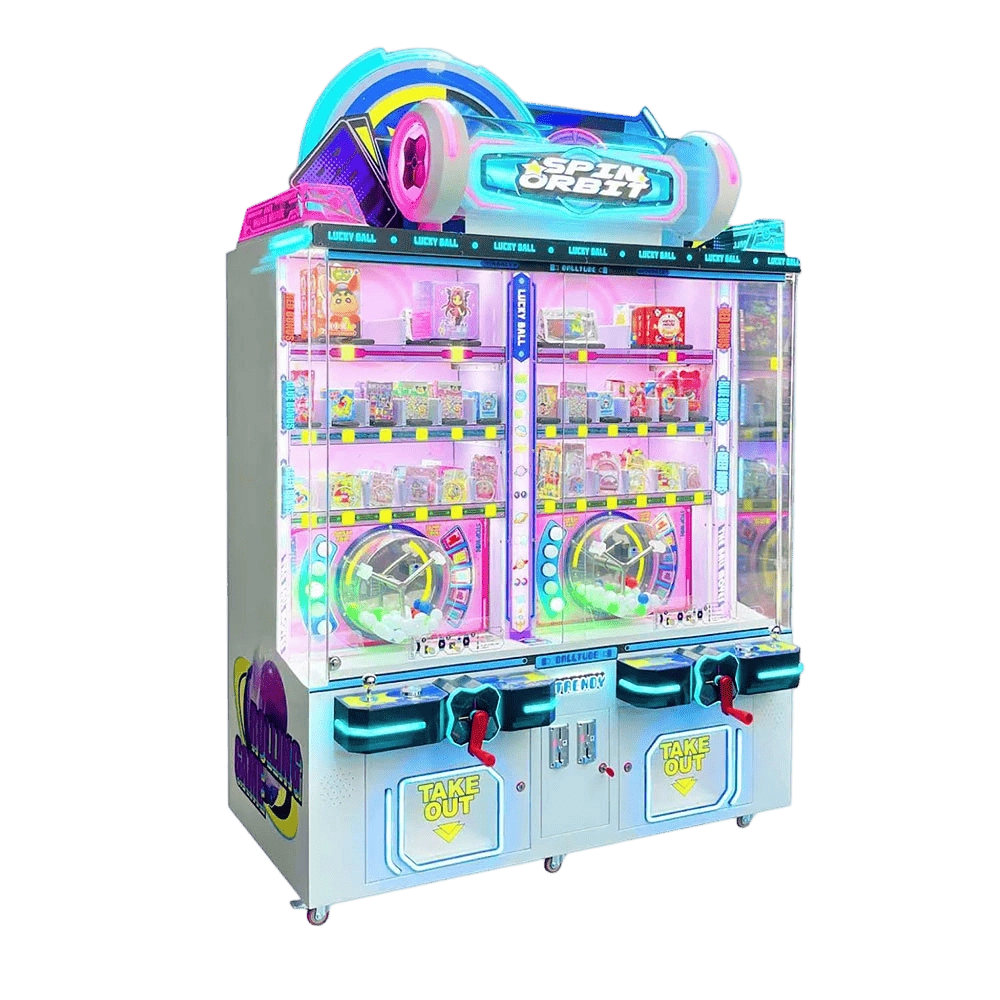
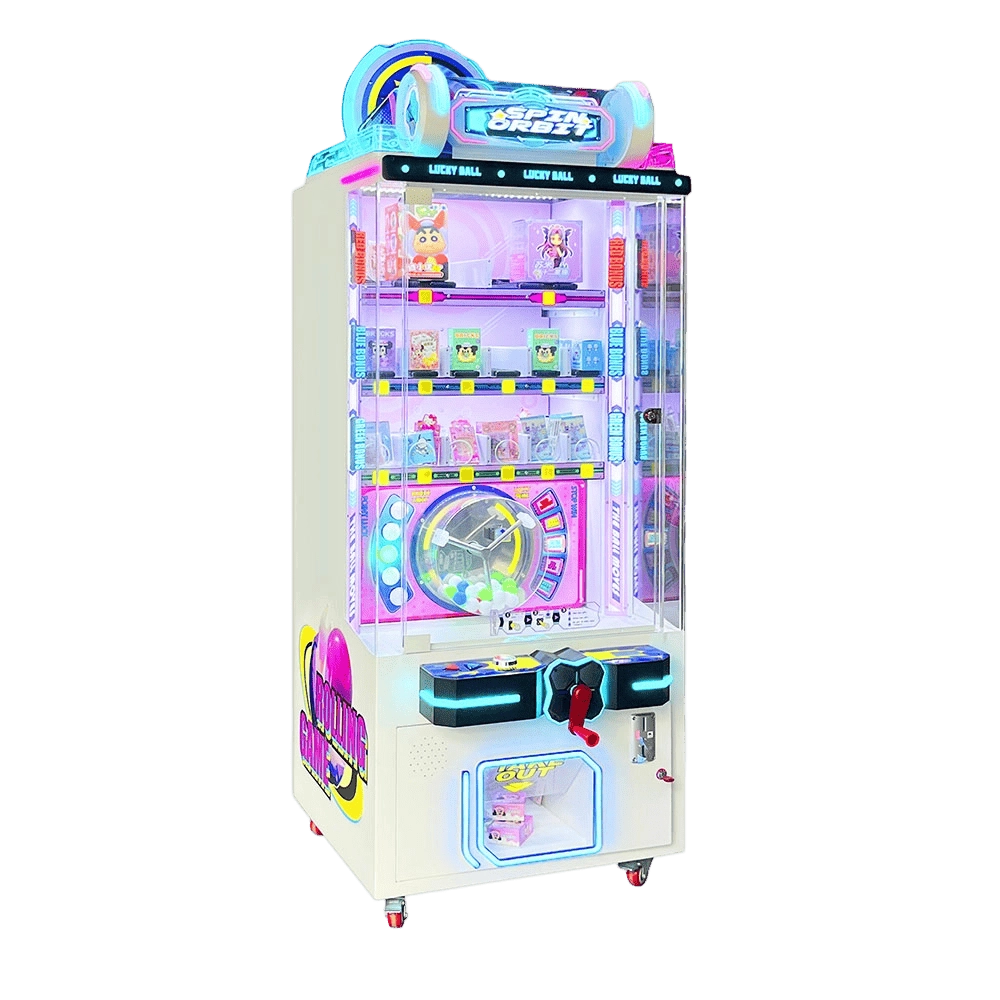
Players use the joystick to guide the ball into a designated hole. Each color ball corresponds to different prize values: red for the highest, blue and green for mid-range prizes, and white for no prize.
How can I customize the game machine?
Customization options include machine title writings, stickers, console designs, and even full personalization of machine body color, music, lights, and language, based on order quantities.
What types of customers does Jiami Games serve?
We serve a wide range of clients, including entertainment centers, shopping malls, theme parks, family entertainment venues, and arcade operators worldwide.
Can I customize the arcade machines to fit my brand?
Yes, we offer full customization, including logo placement, machine color, game software, and even the language on the machine, based on the order quantity.
What is the prize system like?
The prizes are diverse, with different colored balls corresponding to rewards in varying prize tiers, catering to a wide range of player preferences.
You May Also Like
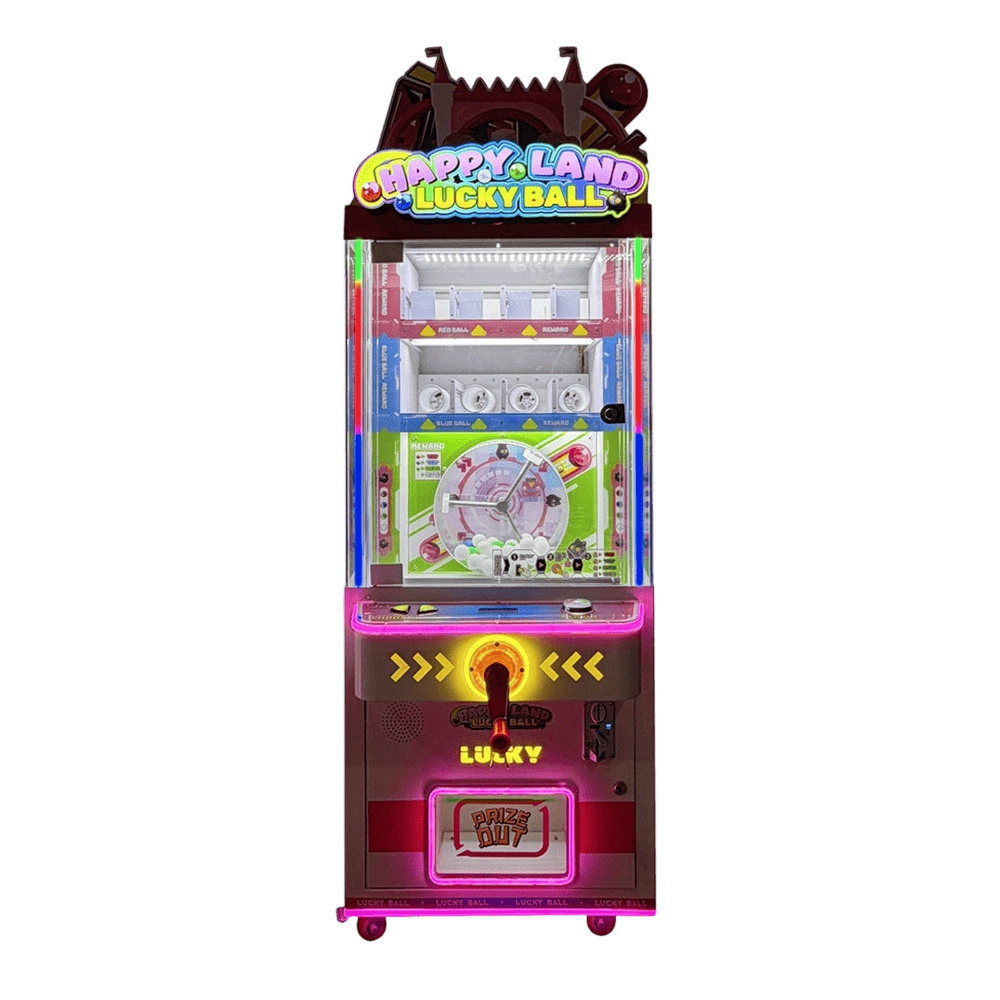
Coin Operated/Card Payment Lucky Ball Vending Toy Gift Arcade Game Machine
Coin Operated/Card Payment 2 Players SPIN ORBIT Lucky Prize Arcade Game
Coin Operated/Card Payment SPIN ORBIT Lucky Prize Arcade Game
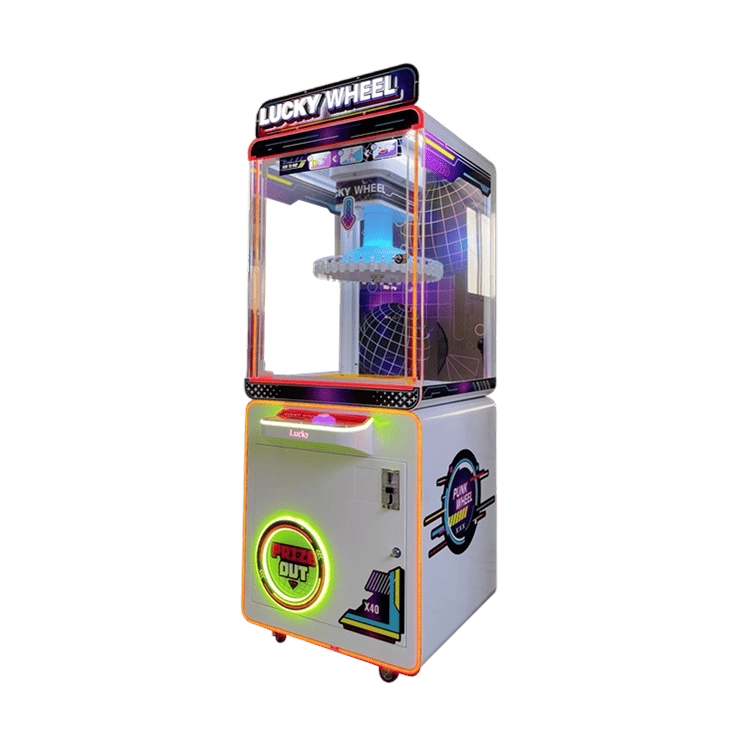
Arcade Prize Lucky Wheel Gift Machine For Amusement Areas
Get in Touch with Jiami Games
If you have any comments or good suggestions, please leave us a message; later our professional staff will contact you as soon as possible.

Innovative Entertainment, at Your Fingertips
Learn about Jiami Games and explore our expertise in console development, innovative design, and global markets.
Quick Links:
© 2026 Jiami Games.
Whatsapp: +8618520390438