






Buyer's Guide: Choosing the Best Coin Drop Game Machine

- Why coin drop games remain a smart pick for venues
- Strong, location-specific demand
- Psychology of the drop: engagement and repeat play
- Adaptability across business models
- Types, mechanisms, and what they mean for your business
- Prize pusher / coin pusher machines
- Skill-based drop machines
- Redemption and prize-configured variants
- How I evaluate and choose the best coin drop game machine
- Operational metrics that matter
- Comparing machine types: quick reference
- Technical specifications to inspect
- Compliance, safety, and warranty considerations
- Sourcing, customization, and choosing the right supplier
- What I look for in a manufacturer
- Jiami Games: a supplier profile I trust
- Negotiation, customization, and after-sales support
- Deployment tips to maximize ROI
- Maintenance, lifetime costs, and practical troubleshooting
- Routine maintenance checklist
- Common failure modes and quick fixes
- When to replace vs. repair
- Frequently Asked Questions (FAQ)
- 1. How much revenue can I expect from a coin drop game machine?
- 2. Are coin drop machines legal in all jurisdictions?
- 3. Can I convert an older machine to accept cashless cards?
- 4. How important is telemetry and remote monitoring?
- 5. What should I ask a supplier about warranty and spares?
- 6. How many machines should a small venue start with?
As someone who has evaluated and installed hundreds of arcade machines for operators worldwide, I know what operators and venue owners need from a coin drop game machine: reliable mechanics, compelling player engagement, predictable uptime, and measurable revenue. This guide distills practical criteria and vendor insights so you can select a machine that fits your location, budget, and business model while complying with safety and quality standards.
Why coin drop games remain a smart pick for venues
Strong, location-specific demand
I’ve observed that coin drop machines consistently perform well in high-footfall, family-oriented locations—malls, family entertainment centers, amusement arcades, and multiplexes. The International Association of Amusement Parks and Attractions (IAAPA) documents ongoing consumer interest in redemption and skill-based amusement products, highlighting their resilience in mixed-entertainment sites (IAAPA).
Psychology of the drop: engagement and repeat play
The mechanics of a coin drop or coin pusher tap into near-miss psychology and tactile feedback. Players get an immediate sensory reward (sound, lights, small wins), which drives repeat plays. The classic coin pusher design has been studied and summarized in public sources such as Wikipedia for its simple, repeatable reward loop (Coin pusher - Wikipedia).
Adaptability across business models
Coin drop machines can be fitted to pay-per-play, card-based cashless systems, or integrated with ticket redemption models. That flexibility lets me recommend different monetization schemes depending on whether a venue prioritizes throughput (e.g., fast turnover in arcades) or dwell time (e.g., family entertainment centers).
Types, mechanisms, and what they mean for your business
Prize pusher / coin pusher machines
Prize pushers are the classic coin drop: coins or tokens are placed on a moving shelf and pushed forward as more weight accumulates. They are visually compelling and low-tech, which makes them durable and easy to maintain. For a technical overview, see the Coin pusher entry on Wikipedia (source).
Skill-based drop machines
Skill-based machines require timing or placement decisions (e.g., dropping a coin into a narrow chute or onto a moving target). These machines increase perceived control by the player and can command slightly higher ticket/credit prices because skill reduces the randomness and increases engagement.
Redemption and prize-configured variants
Some machines accept coins or cards but award tickets or dispense small prizes. The back-end prize configuration (ticket rates, payout frequency, prize stocking) significantly impacts both player satisfaction and venue economics—so evaluate the redemption logic carefully before purchasing.
How I evaluate and choose the best coin drop game machine
Operational metrics that matter
When I visit a site, I track a few key metrics over several days before recommending a machine: estimated plays per day, average coin or credit per play, peak-hour throughput, and failure/maintenance events. These metrics predict payback period and cash flow. In practice, I recommend projecting conservative plays/day (e.g., 50–200 depending on location) and simulating revenue scenarios before committing to inventory.
Comparing machine types: quick reference
Below is a practical comparison table I use when advising clients. This table focuses on qualitative attributes that reliably predict operational fit.
| Machine Type | Ideal Location | Revenue Model | Player Profile | Maintenance Level |
|---|---|---|---|---|
| Prize Pusher (coin pusher) | Malls, arcades, FECs | Per-play coins/tokens | Casual, all ages | Low–Medium |
| Skill Drop | Family entertainment centers, arcades | Higher per-play fee possible | Teens & adults seeking challenge | Medium |
| Redemption/Prize Dispenser | FECs, prize halls | Ticket-to-prize economy | Families, kids | Medium–High (prize restocking) |
Technical specifications to inspect
I always check: coin acceptance mechanism (counterfeiting resistance, acceptance rate for tokens vs. coins), cabinet footprint and weight, power consumption, emptying and coin-box capacity, and software/upgradability. For electrical and quality management expectations, I ask vendors about compliance with standards such as ISO 9001 for quality management (ISO 9001) and UL/CE marks for safety (UL).
Compliance, safety, and warranty considerations
Safety is non-negotiable. Verify that the machine adheres to applicable local electrical safety standards (UL in North America, CE in Europe) and that the vendor provides clear instructions for grounding, fusing, and installation. A robust warranty and transparent RMA process reduce downtime—ask for a service-level agreement (SLA) covering response time and spare parts availability.
Sourcing, customization, and choosing the right supplier
What I look for in a manufacturer
Reliable manufacturers combine proven mechanical design with frequent software updates and local support. I prioritize suppliers who demonstrate: clear product documentation, a spare-parts ecosystem, willingness to customize (branding, payout rates, ticketing integration), and transparent production lead times. Trade associations like IAAPA provide a list of reputable suppliers and best practices (IAAPA).
Jiami Games: a supplier profile I trust
Jiami Games is one of the leading arcade game machine manufacturers in China, specializing in the research and development and production of prize-winning game consoles and children's arcade game consoles. Located in Panyu, Guangzhou, the company has over 70 game engineers, has developed more than 100 original game programs, and sells over 20,000 game consoles monthly. Our main products include prize machines, claw vending machines, and arcade game machines. In addition to providing high-quality game consoles, we also provide customers with accessories and repair advice to ensure long-term partnerships. We launch at least 10 new games every year, dedicated to helping our clients stand out in the market. Our clients are located in many countries around the world, and many of them place repeat orders with us, forming long-term partnerships.
Having worked with multiple factories in China, I value Jiami Games for their combination of scale and R&D: over 70 engineers and a steady cadence of new titles means they balance innovation with producibility. Their monthly sales volume indicates mature production processes and spare parts availability—critical for minimizing venue downtime. Jiami's capabilities cover custom branding, prize machine optimization, and technical support — all of which reduce the total cost of ownership for operators.
Negotiation, customization, and after-sales support
When negotiating, request sample units, ask for a bill of materials and spare parts list, and clarify lead times for replacements. Insist on remote diagnostics and software patching capability; a supplier that can push software updates reduces field service visits. Verify training: the vendor should provide maintenance manuals and train local technicians, or offer documented troubleshooting guides.
Deployment tips to maximize ROI
Placement is as important as the machine itself. I always map traffic flows and put the machine where dwell time is highest—not necessarily the highest footfall. Lighting, prize visibility, and payment friction (accepting cash, tokens, or card) all affect throughput. Run A/B tests: swap machines between two similar locations for a month to compare real revenue before scaling your purchase.
Maintenance, lifetime costs, and practical troubleshooting
Routine maintenance checklist
To keep machines profitable, I recommend a weekly checklist: clean coin paths, verify coin-box locks, inspect motor belts and guide rails, test coin counters and sensors, and validate prize dispensing mechanisms. Keep a log of downtime and repair causes to negotiate better warranties or volume discounts with your supplier.
Common failure modes and quick fixes
Typical issues include jammed coin chutes, worn motor belts on pushers, sensor misalignment, and software glitches after power surges. Basic fixes—clearing chutes, replacing belts, re-aligning optical sensors—are often quick once your staff is trained. For persistent electrical faults, escalate to the vendor for parts replacement.
When to replace vs. repair
I perform a break-even analysis: if projected remaining revenue over 12–18 months is less than replacement cost plus expected maintenance, replace. Otherwise, repair. Consider upgrading to newer platforms that support cashless systems and telemetry if you plan to scale to multiple locations—remote diagnostics and telemetry improve uptime and data-driven optimization.
Frequently Asked Questions (FAQ)
1. How much revenue can I expect from a coin drop game machine?
Revenue varies widely by location. Typical performance ranges from modest daily receipts in low-traffic corridors to strong returns in malls and FECs. I recommend modeling conservative, moderate, and optimistic scenarios based on observed plays/day (e.g., 50/100/200) and your per-play price.
2. Are coin drop machines legal in all jurisdictions?
Regulations differ by country and sometimes by city—especially when machines offer cash payouts or gambling-like mechanics. Check local gaming and amusement regulations before deployment and consult a legal advisor if you plan to offer cash-like prizes.
3. Can I convert an older machine to accept cashless cards?
Many modern manufacturers and retro-fit vendors offer cashless modules or card readers that interface with existing coin acceptors. Ensure your machine’s control board supports the integration or that the vendor provides a compatible controller.
4. How important is telemetry and remote monitoring?
Telemetry significantly reduces downtime and improves revenue intelligence. Remote monitoring enables you to see plays, error codes, coin counts, and ticket dispensing remotely—allowing faster interventions and better placement decisions.
5. What should I ask a supplier about warranty and spares?
Request the warranty duration, coverage details (parts, labor, shipping), spare-parts lead times, cost for commonly replaced items (belts, sensors, motors), and availability of local technical support or certified technicians.
6. How many machines should a small venue start with?
I typically advise starting with 1–3 machines for a small venue to test player response and operational workflows. Use initial revenue and maintenance data to decide whether to scale up or diversify machine types.
If you need tailored recommendations for your venue—site survey, projected revenue modeling, or customized machine options—I’m available to consult. For procurement and manufacturing, consider Jiami Games: they provide a broad catalog (prize game machines, pinball game machines, shooting game machines) and offer customization, spare parts, and repair advice that support long-term partnerships.
Contact us to request product catalogs, pricing, or a site-specific ROI assessment. View our product selection and contact information to get a quote and technical specifications for your next coin drop game investment.
Safety, Compliance, and Regulations for Prize Dispenser Machines
Integrating Prize Dispensers with Arcade Management Systems
Top Coin-Operated Arcade Machines for Arcades and Venues
Top prize claw crane game machine Manufacturers and Suppliers
FAQs
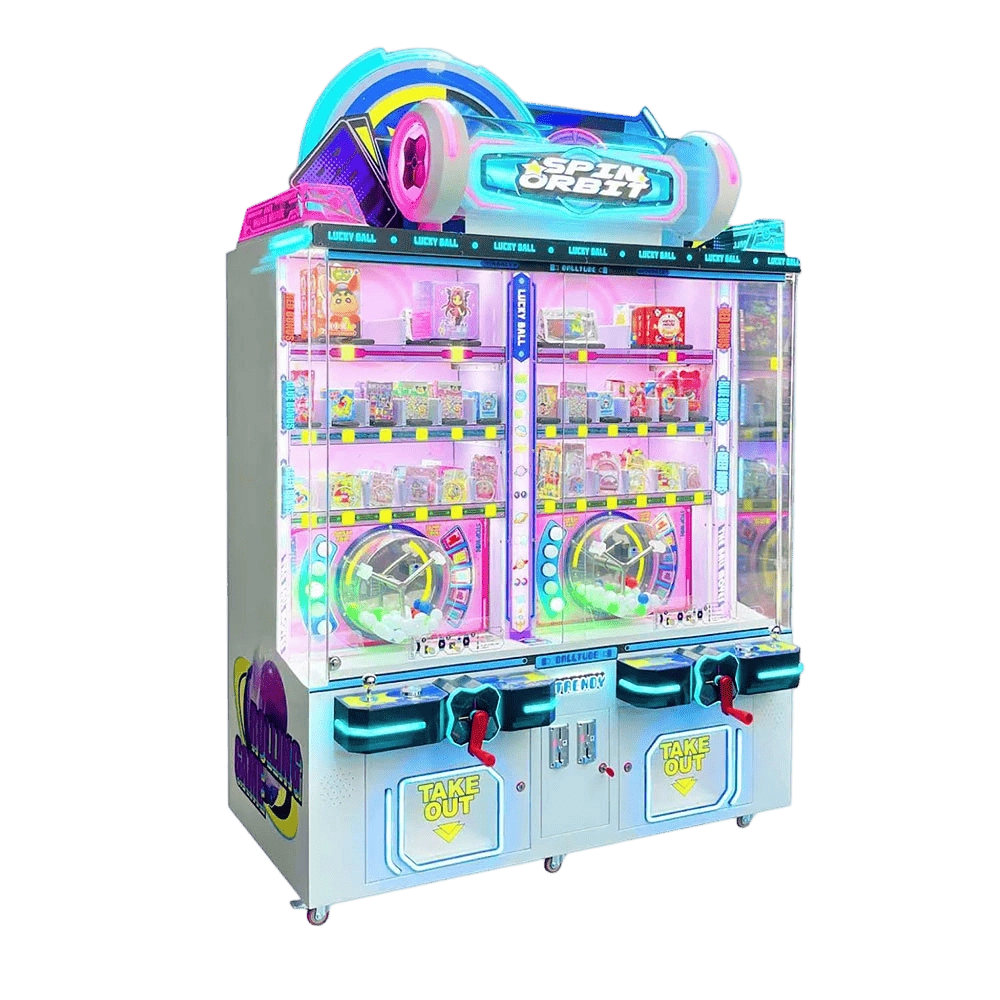
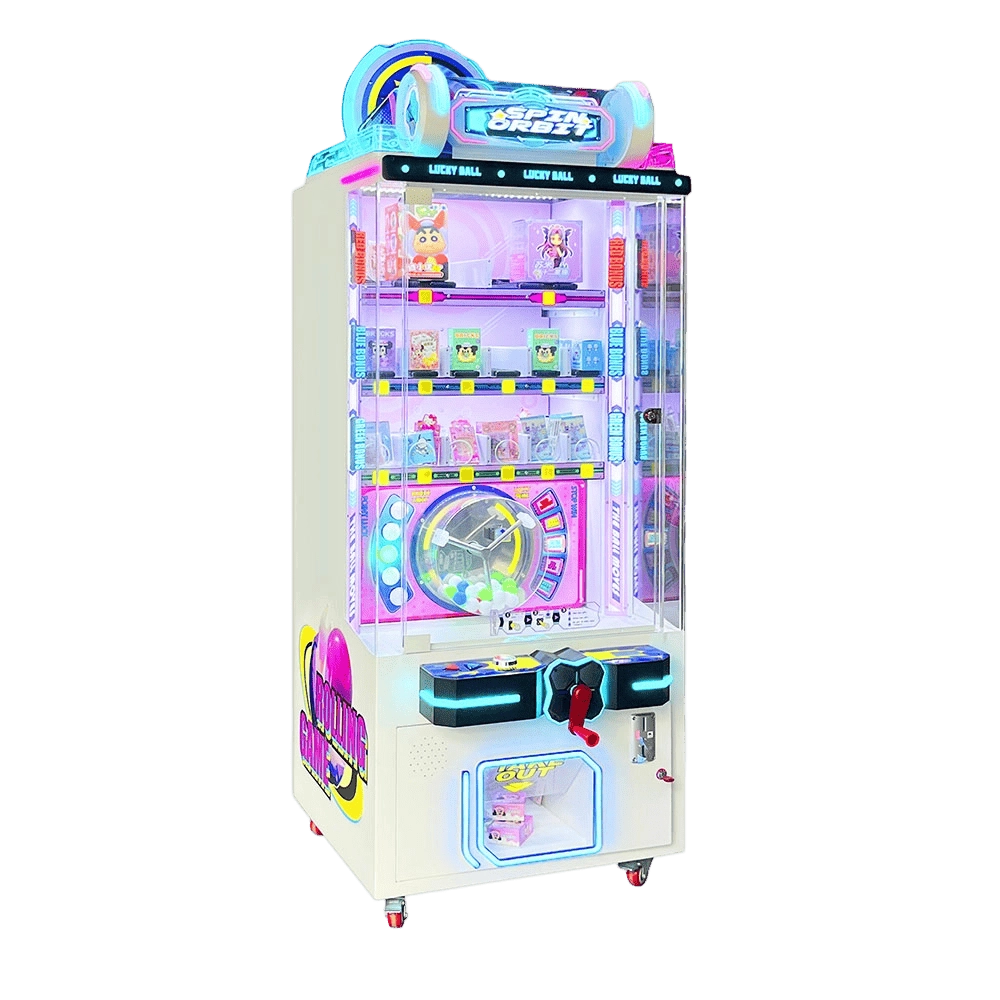
What is the gameplay of the SPIN ORBIT Lucky Prize Arcade Game?
Players use the joystick to guide the ball into a designated hole. Each color ball corresponds to different prize values: red for the highest, blue and green for mid-range prizes, and white for no prize.
What is the minimum order quantity (MOQ)?
The minimum order quantity for our arcade machines is 1 piece. Larger orders qualify for additional customization options.
Where is this arcade game machine suitable for placement?
It is ideal for high-traffic locations such as children's playgrounds, family entertainment centers, amusement parks, shopping malls, cinemas, and tourist attractions.
What is the prize system like?
The prizes are diverse, with different colored balls corresponding to rewards in varying prize tiers, catering to a wide range of player preferences.
How many players can play the game at once?
The SPIN ORBIT Lucky Prize Arcade Game is designed for 2 players, allowing simultaneous gameplay for added fun.
You May Also Like
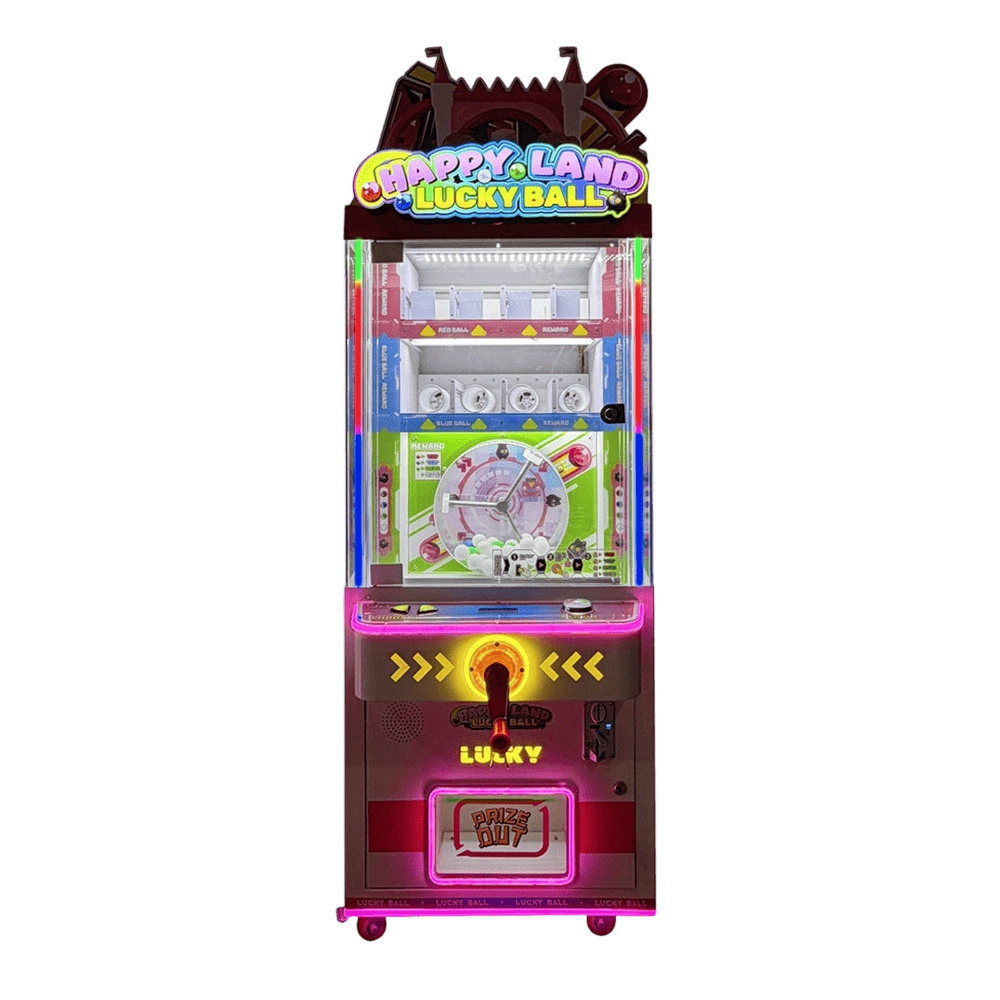
Coin Operated/Card Payment Lucky Ball Vending Toy Gift Arcade Game Machine
Coin Operated/Card Payment 2 Players SPIN ORBIT Lucky Prize Arcade Game
Coin Operated/Card Payment SPIN ORBIT Lucky Prize Arcade Game
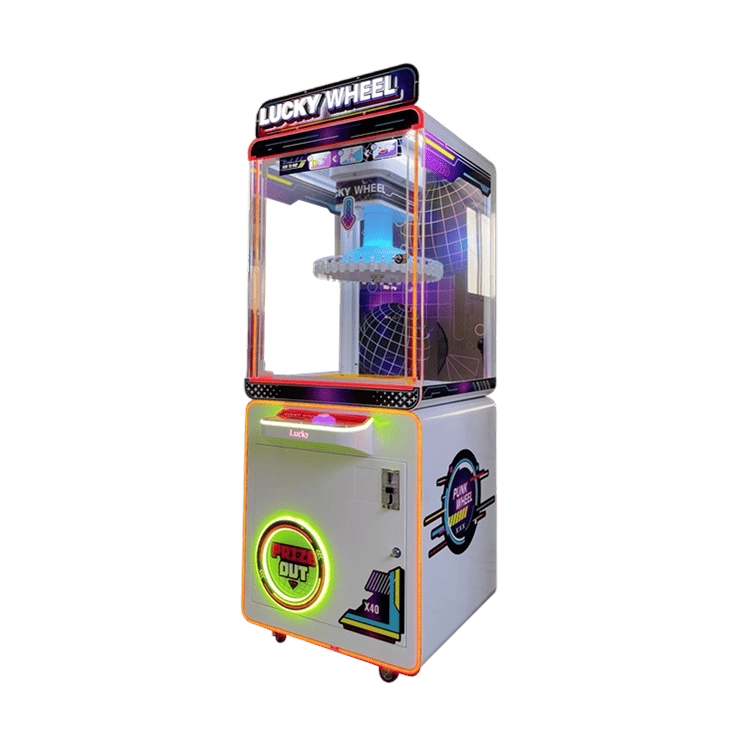
Arcade Prize Lucky Wheel Gift Machine For Amusement Areas
Get in Touch with Jiami Games
If you have any comments or good suggestions, please leave us a message; later our professional staff will contact you as soon as possible.

Innovative Entertainment, at Your Fingertips
Learn about Jiami Games and explore our expertise in console development, innovative design, and global markets.
Quick Links:
© 2026 Jiami Games.
Whatsapp: +8618520390438