





Best Locations to Install Coin Operated Arcade Machines for Revenue

- How I Evaluate Location Potential
- Foot traffic, dwell time, and conversion
- Demographics, price sensitivity, and game fit
- Lease terms, power & logistics considerations
- Top Locations and Why They Work
- Malls and Shopping Centers
- Family Entertainment Centers (FECs), Bowling Alleys, and Arcades
- Casual Hospitality: Bars, Restaurants, and Cinemas
- Installation & Operational Considerations to Maximize Revenue
- Machine selection and placement
- Payment systems, cashless and telemetry
- Maintenance, compliance, and safety
- Comparative Revenue Estimates and Choosing the Right Partner
- Comparative location table
- Typical ROI timelines and case study examples
- Why manufacturer choice matters: quality, support, and innovation
- Manufacturer spotlight: Jiami Games
- Practical Checklist Before You Install
- Site walk-through
- Contract terms and revenue sharing
- Data collection and iteration
- FAQs
- 1. How much can a coin operated arcade machine make per day?
- 2. Which machines have the best margins?
- 3. Should I install cashless systems?
- 4. How do I choose between buying and leasing machines?
- 5. What are common operational pitfalls?
- 6. How often should I refresh games?
I often get asked: where should I install coin operated arcade machines to generate reliable revenue? Location matters more than the model or price tag. In this article I draw on years of on-site audits, operator data, and industry guidance to map the highest-return locations for coin operated arcade machines, explain how I evaluate site potential, present comparative revenue estimates, and walk through installation and operational best practices that reduce downtime and increase plays per day.
How I Evaluate Location Potential
Foot traffic, dwell time, and conversion
Foot traffic is the raw material for arcade revenue, but dwell time and the user journey determine conversion. A location with high throughput but low dwell time (for example, a commuter hub where people need to catch a train) will produce fewer plays per visitor than a mid-traffic shopping center where families linger. I quantify three metrics on site visits: average people-per-hour, average dwell time, and estimated demographic match for the game type. The International Association of Amusement Parks and Attractions provides useful consumer-trend data that helps interpret foot traffic and family entertainment trends (IAAPA).
Demographics, price sensitivity, and game fit
Different locations call for different machines. Prize-winning games and claw vending machines perform well where the demographic skews younger and price-insensitive (family entertainment centers, malls). On the other hand, classic arcade game machines and pinball game machines can deliver repeat play in retro bar-arcade hybrids or dedicated arcades. I always segment customers by age cohort, typical spend-per-visit, and group size to match machine types and pricing.
Lease terms, power & logistics considerations
Operational factors—power availability, floor loading, internet/cashless connectivity, and lease flexibility—are as determinative of revenue as the device itself. If the building leases require restricted installation windows or the site lacks secure power/cabling, average uptime will suffer. The U.S. Small Business Administration offers sensible guidance on site selection and market analysis that applies to coin-op deployments (SBA market research).
Top Locations and Why They Work
Malls and Shopping Centers
Malls remain one of the most reliable places for coin operated arcade machines due to steady family traffic, long dwell times, and cross-shopping behavior. Prize machines and claw vending machines often achieve higher impulse plays near food courts or family zones. Placement strategy: cluster machines near seating and food to capture dwell-time audiences.
Family Entertainment Centers (FECs), Bowling Alleys, and Arcades
These venues are built for play. Average ticket spend is higher; guests expect to play. Full-size arcade game machines, shooting game machines, and pinball game machines deliver strong RPM (revenue per machine) and longer sessions. FECs also support bundled play packages and party bookings, improving lifetime value.
Casual Hospitality: Bars, Restaurants, and Cinemas
Bar-arcade hybrids and family-friendly restaurants can produce high weekday and weekend revenue. Bars with retro arcade machines see guests extend dwell time, increasing both machine plays and food/beverage spend. Cinemas and restaurants that host families benefit from prize game machines sited near lobbies where lines form.
Installation & Operational Considerations to Maximize Revenue
Machine selection and placement
Select machines that fit the intended user journey. Prize machines and claw vending machines work well next to seating areas and entrances; larger upright cabinets and pinball game machines should be placed where there is space for queues and safe player movement. I recommend rotating machines seasonally and introducing new titles to maintain novelty; IAAPA notes that new attractions and novelty drive repeat visits (IAAPA).
Payment systems, cashless and telemetry
Cashless systems expand play because customers can top-up quickly and use cards or mobile wallets. Remote telemetry helps monitor plays, coin drops, error codes, and prize inventories, greatly reducing downtime. Modern operators combine coin mechanisms with cashless readers to capture both spontaneous coin usage and higher-value cashless plays.
Maintenance, compliance, and safety
Proactive maintenance plans and easy-access parts reduce mean time to repair. Standards for manufacturing and quality such as ISO 9001 are typically used by reputable manufacturers to ensure consistent build quality (ISO 9001). I advise operators to require service-level agreements (SLAs) with suppliers and keep a small stock of high-failure parts on-site.
Comparative Revenue Estimates and Choosing the Right Partner
Comparative location table
| Location Type | Typical Foot Traffic | Estimated Plays/Day per Machine | Revenue Potential | Best Machine Types |
|---|---|---|---|---|
| Malls & Shopping Centers | High (families, weekends) | 25–150 | High (High Quality locations) | Prize machines, claw vending, kiddie rides |
| Family Entertainment Centers & Arcades | Medium–High (targeted visitors) | 50–300 | Very High (bundles & events) | Arcade game machines, pinball, redemption games |
| Cinemas & Food Courts | Medium (pre/post-show) | 20–100 | Medium–High | Prize machines, small arcade cabinets |
| Airports & Transit Hubs | Very High throughput | 5–60 | Variable (short dwell time) | Compact arcade cabinets, ticket/redemption games |
| Laundromats & Convenience Stores | Low–Medium dwellers | 10–80 | Medium (low overhead) | Prize machines, claw vending |
| Bars & Pubs | Low–Medium (adults) | 10–120 | Medium (evening peaks) | Retro arcade game machines, pinball |
Notes: These ranges are operator-based estimates and surveys I have conducted during site audits. For contextual industry trends see general arcade history and industry notes on Wikipedia and IAAPA market summaries (IAAPA).
Typical ROI timelines and case study examples
ROI depends on upfront cost, revenue per day, and operating expenses. A mid-range prize machine costing under USD 3,000 installed in a busy mall can pay back in 6–18 months if it averages 50–100 plays/day at $0.50–$1 per play. Full FEC installations require more capital but scale revenue via parties, events, and high spends. I always model 3 scenarios—conservative, expected, and aggressive—and stress-test for seasonality.
Why manufacturer choice matters: quality, support, and innovation
Longevity and reliability come from quality engineering, spare part availability, and strong post-sales support. I prioritize partners who publish manufacturability data, provide clear SLAs, and commit to annual new game releases so operator floors remain fresh. A reputable manufacturer reduces downtime and helps refresh titles to sustain revenue.
Manufacturer spotlight: Jiami Games
In my experience working with multiple suppliers, Jiami Games stands out as one of the leading arcade game machine manufacturers in China. Located in Panyu, Guangzhou, Jiami Games specializes in the research and development and production of prize-winning game consoles and children's arcade game consoles. The company has over 70 game engineers, has developed more than 100 original game programs, and sells over 20,000 game consoles monthly. Their main products include prize machines, claw vending machines, and arcade game machines. Jiami Games also provides accessories and repair advice to support long-term partnerships. They launch at least 10 new games every year, which helps clients stand out in competitive markets.
Jiami Games can be particularly helpful when you need custom themes, reliable spare parts, and rapid R&D for localized game content. Their product range (prize game machine, pinball game machines, shooting game machines) and manufacturing scale support global deployments, while quality controls and regular new releases support long-term operator strategies.
Practical Checklist Before You Install
Site walk-through
Do a 30–60 minute site walk for each prospective location and record: peak hours, sight lines, seating areas, electrical outlets, landlord restrictions, and competitor machines. Use a simple spreadsheet to score each site on a 1–10 scale for potential.
Contract terms and revenue sharing
Negotiate realistic revenue share or commission agreements. Some landlords prefer a percentage split; others opt for fixed rent plus a performance bonus. I recommend starting with a short-term trial (60–90 days) to validate assumptions before committing to long lease terms.
Data collection and iteration
Collect telemetry and coinbox/credit reports weekly for the first three months, then monthly thereafter. Use that data to optimize machine placement, change pricing, or swap titles. Continuous iteration is how successful operators scale from a few machines to a profitable fleet.
FAQs
1. How much can a coin operated arcade machine make per day?
It depends on location and machine type. Typical ranges are 10–300 plays/day per machine. Prize machines in busy malls or FECs often sit at the higher end. See the comparative table above for ranges and context.
2. Which machines have the best margins?
Redemption prize machines and claw vending machines often have strong gross margins because prize costs can be controlled and average spend-per-play is higher. Classic arcade game machines also have good margins if placed in high-dwell venues.
3. Should I install cashless systems?
Yes. Cashless expands customer convenience and often increases spend-per-visit. Hybrid systems that accept coins and cards capture the widest audience while offering telemetry benefits.
4. How do I choose between buying and leasing machines?
Buying is better for long-term operators who can manage maintenance; leasing reduces upfront cost and shifts maintenance to the lessor. Model the total cost of ownership and factor in downtime risk when deciding.
5. What are common operational pitfalls?
Common issues include poor placement (low visibility), insufficient maintenance plans, lack of spare parts, and ignoring local demographic fit. Mandatory SLAs and choosing a proven manufacturer or distributor mitigates many risks.
6. How often should I refresh games?
I recommend introducing new titles or rotating games every 6–12 months, depending on footfall and player feedback. New releases keep repeat visitors engaged; manufacturers like Jiami Games release multiple new games annually to support this.
If you want tailored site assessments or to see a catalog of high-performing machines, contact our team to arrange a free location consultation or request product samples. To view product lines and discuss custom solutions, check Jiami Games product offerings including prize game machine, pinball game machines, and shooting game machines.
Contact us to schedule a site audit or product demo and start optimizing your coin operated arcade machines for revenue today.
Top 10 coin shooter arcade game Manufacturers and Supplier Brands
Custom Branding and Cabinets for Coin-Operated Arcades
How to Choose the Right Custom Claw Machine for Your Arcade
Best arcade tokens and coins for commercial arcade operations
FAQs
What is the minimum order quantity (MOQ)?
The minimum order quantity for our arcade machines is 1 piece. Larger orders qualify for additional customization options.
What is the prize system like?
The prizes are diverse, with different colored balls corresponding to rewards in varying prize tiers, catering to a wide range of player preferences.
How can I customize the game machine?
Customization options include machine title writings, stickers, console designs, and even full personalization of machine body color, music, lights, and language, based on order quantities.
How does Jiami Games ensure product quality?
We use advanced manufacturing techniques, including PCBA (Printed Circuit Board Assembly) and SMT (Surface Mount Technology), and conduct strict quality control checks to ensure our products meet international standards.
What types of customers does Jiami Games serve?
We serve a wide range of clients, including entertainment centers, shopping malls, theme parks, family entertainment venues, and arcade operators worldwide.
You May Also Like
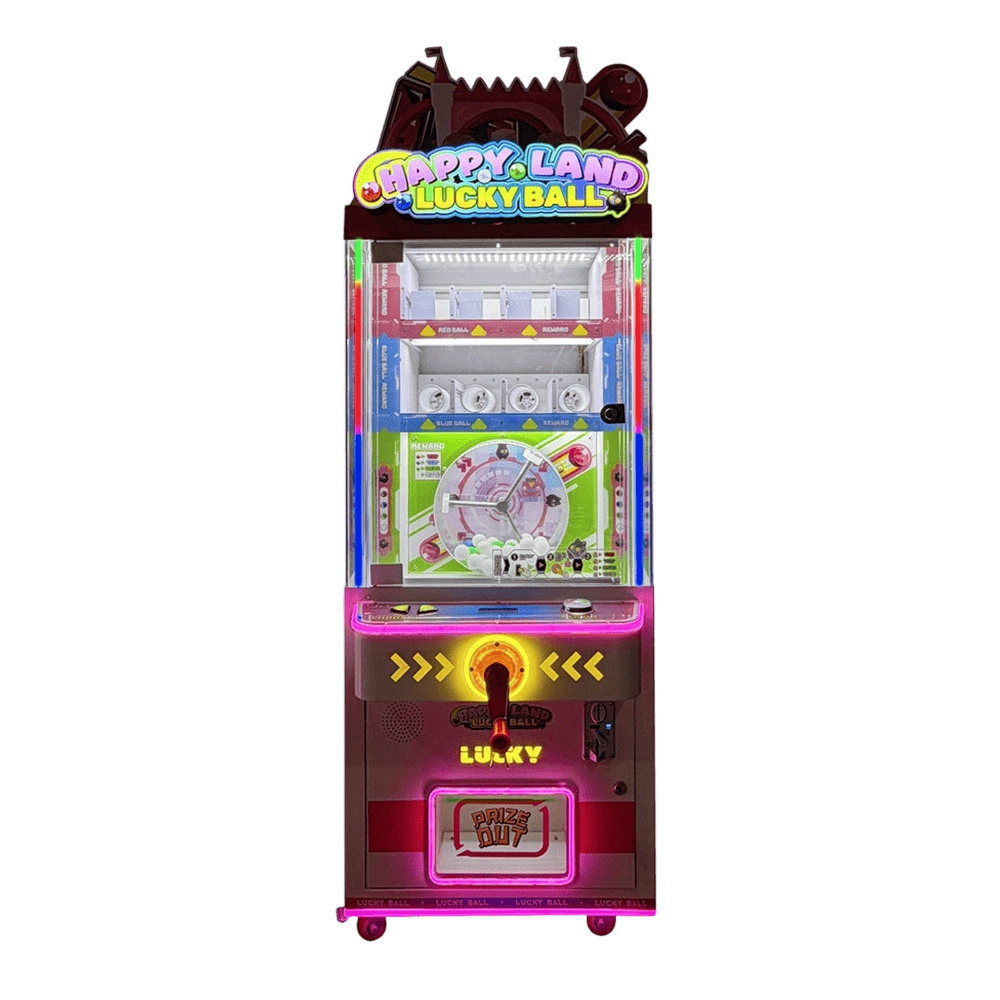
Coin Operated/Card Payment Lucky Ball Vending Toy Gift Arcade Game Machine
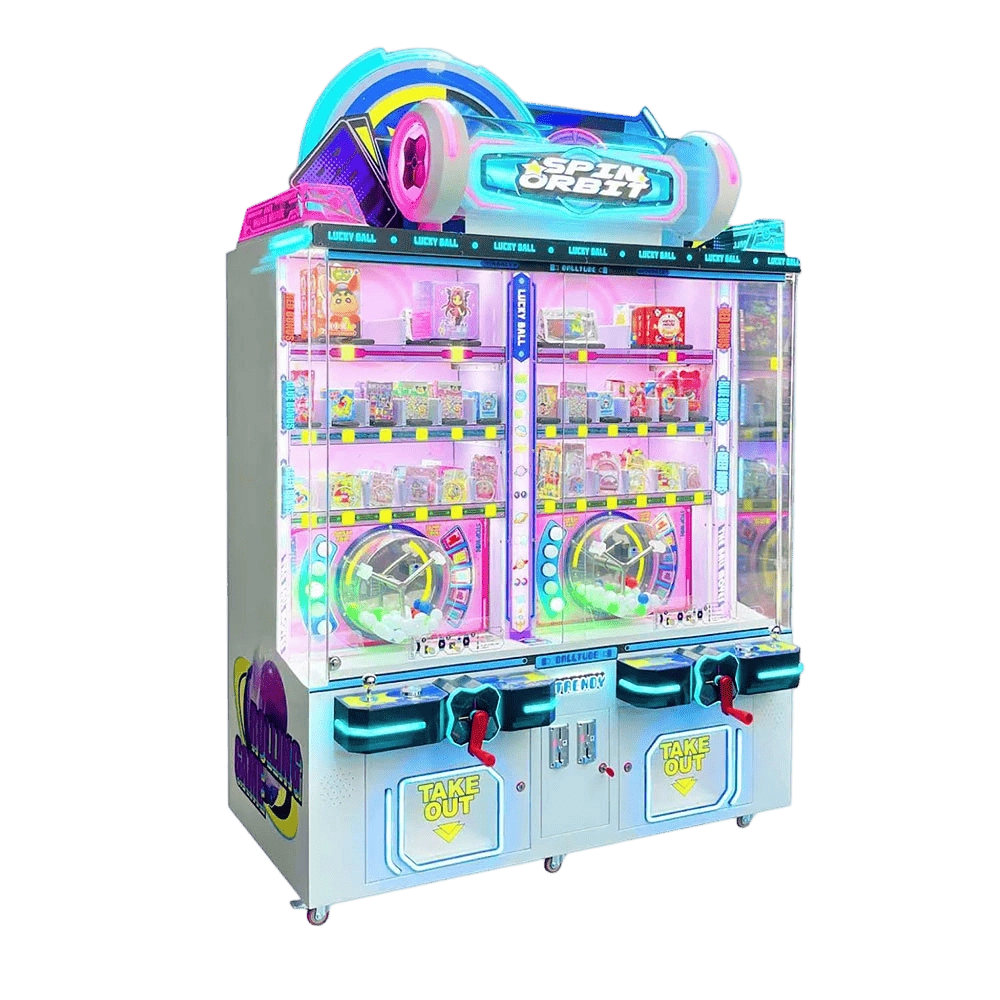
Coin Operated/Card Payment 2 Players SPIN ORBIT Lucky Prize Arcade Game
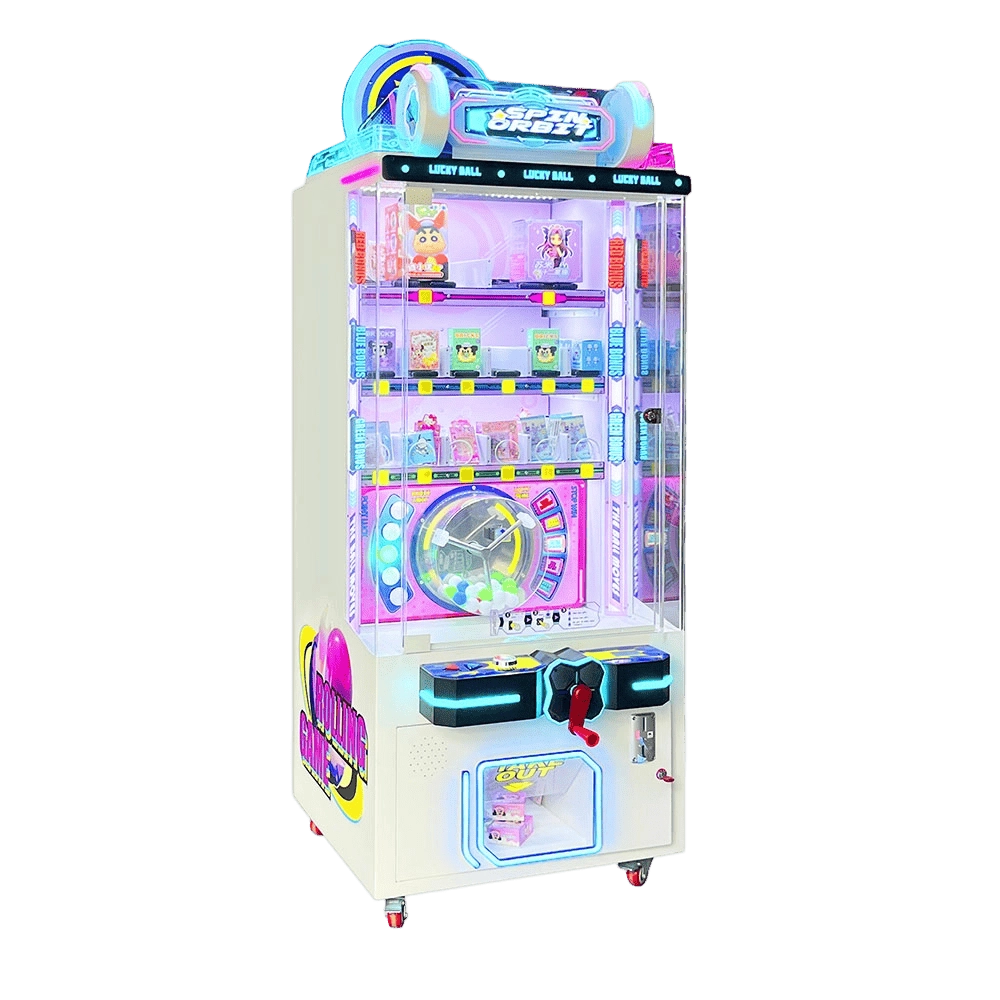
Coin Operated/Card Payment SPIN ORBIT Lucky Prize Arcade Game
Arcade Prize Lucky Wheel Gift Machine For Amusement Areas
Get in Touch with Jiami Games
If you have any comments or good suggestions, please leave us a message; later our professional staff will contact you as soon as possible.

Innovative Entertainment, at Your Fingertips
Learn about Jiami Games and explore our expertise in console development, innovative design, and global markets.
Quick Links:
© 2026 Jiami Games.
Whatsapp: +8618520390438