






7 Secrets to Buying the Perfect Coin Operated Pachinko Machine for Your Home Game Room

- What is a Coin Operated Pachinko Machine?
- Why the Distinction Matters
- Quick Summary: Key Takeaways for Buyers
- Secret #1: The 'Coin' vs. 'Ball' Confusion – Know What You Are Buying
- The Visual Test
- Secret #2: The 'Cycle' Dilemma – Recirculating vs. Semi-Automatic
- Why Cyclic is Worth the Extra Cost
- Secret #3: Decoding the 'Shōwa' Date Tags for Vintage Value
- The Calculation Formula
- Secret #4: The Voltage Trap – Don't Fry Your Electronics
- The Necessity of a Transformer
- Secret #5: Inspecting the 'Cell' and 'Nails' (Kugi) Condition
- What to Look For
- Secret #6: Pricing in 2026 – Avoid Overpaying
- Fair Market Estimates
- Secret #7: The Maintenance Reality – Electronic vs. Mechanical Guts
- Volume and Sensors
- Conclusion
- Can I make money with a coin operated pachinko machine at home?
- What is the difference between Pachinko and Pachislo?
- Do I need a transformer for a Japanese pachinko machine?
- How many balls do I need for a home pachinko machine?
- How do I date my vintage pachinko machine?
- Why is my pachinko machine so loud?
- Where can I buy a reliable pachinko machine?
- What does the 'CR' mean on modern machines?
What is a Coin Operated Pachinko Machine?
A coin-operated pachinko machine most often refers to a Pachislo (skill-stop slot) machine which uses tokens, or a traditional Pachinko unit modified with a coin mechanism for arcade routes. Unlike standard parlor machines that rely on renting steel balls via a card system, home-optimized units are self-contained. They bridge the gap between authentic Japanese gambling aesthetics and convenient Western arcade functionality.
Why the Distinction Matters
Buying the wrong machine type is the most common mistake for new enthusiasts. While traditional Pachinko offers a mesmerizing, vertical pinball experience, it requires hundreds of steel balls and frequent handling. A "coin-operated" unit typically implies a Pachislo, which functions more like a Vegas slot machine but with a skill-stop element. Understanding this difference ensures your home game room arcade setup aligns with your expectations for noise, maintenance, and gameplay style.
- True Pachinko: Uses 11mm steel balls; gravity-fed gameplay.
- Pachislo: Uses 25mm coins/tokens; spinning reel gameplay.
- Hybrid: Rare Pachinko units modified aftermarket to accept quarters (often found in older US arcades).
Quick Summary: Key Takeaways for Buyers
Before diving into the secrets, here is the cheat sheet for making a smart purchase in 2026.
- Identify your preference: Decide between vertical pinball (Pachinko) vs. spinning reels (Pachislo).
- Vintage vs. Modern: Vintage machines (pre-1980) offer mechanical reliability, whereas modern ones require complex electronics maintenance.
- The Voltage Rule: Always account for the 'Voltage Trap'—Japanese machines need transformers to run safely in the US.
- Value Factors: Price does not always equal quality; rarity and 'Cycle' features matter more than flashy lights.
Secret #1: The 'Coin' vs. 'Ball' Confusion – Know What You Are Buying
The primary confusion in this market stems from listings that incorrectly label Pachislo slots as "Coin Operated Pachinko." You must verify the mechanism before purchase to avoid disappointment. The Pachinko vs Pachislo difference is fundamental: one is a gravity game, the other is a reel game.
The Visual Test
If the machine has three spinning reels in the center, it is a Pachislo. If it has a large vertical playfield with pins and a hole at the bottom, it is a Pachinko machine. For a dedicated game room, Pachislo is often easier to maintain because tokens are less messy than thousands of steel balls. However, purists argue that only Pachinko provides the authentic "Japanese Parlor" experience. As noted by industry experts at SiGMA World, while they share a lineage, Pachislo is closer to a western slot machine, whereas Pachinko is a unique mechanical derivative of the "Corinth game" from the 1920s.
- Pachinko: Vertical playfield, gravity-fed balls, requires a 'ball lifter' or manual refill for home play.
- Pachislo: Three reels, uses tokens/coins, typically easier to maintain for beginners.
- Verdict: If you want "Coin Operated" for a game room route, Pachislo is the native choice; Pachinko requires aftermarket modification to accept coins.
Secret #2: The 'Cycle' Dilemma – Recirculating vs. Semi-Automatic
For home use, a "Cyclic" (recirculating) machine is superior because it automatically returns played balls to the shooter tray, eliminating the need for manual refilling. Parlor machines are designed to be fed by massive overhead ball delivery systems, which are impossible to replicate at home without extensive construction.
Why Cyclic is Worth the Extra Cost
Non-cyclic machines require you to physically scoop balls from the back bottom tray and dump them into the top hopper every few minutes. This interrupts gameplay and requires you to own 1,000+ balls. A cyclic modification closes the loop internally, allowing you to play indefinitely with just 50 balls. This is a critical factor for a relaxing home game room arcade setup.
- Parlor Standard: Requires constant ball refills from overhead systems.
- Home Secret: Look for 'Cyclic' modifications where balls return to the shooter tray automatically.
- Ball Count: Non-cyclic machines require thousands of balls and buckets to operate smoothly.
- Convenience: Buying a pre-modified cyclic machine saves hours of frustration.
Secret #3: Decoding the 'Shōwa' Date Tags for Vintage Value
To accurately date a vintage machine, you must read the expiration tag using the Japanese Imperial calendar (Shōwa era). Machines are often dated based on the Emperor's reign rather than the Western Gregorian calendar.
The Calculation Formula
Use the formula: Shōwa Year + 1925 = Western Year. For example, a machine stamped "Shōwa 50" was manufactured in 1975 (50 + 1925). This is vital for determining the vintage pachinko machine value 2026 trends, as pre-1980 mechanical units are skyrocketing in value compared to mass-produced 90s units.
- Verification: Verify expiration tags vs. patent tags to determine actual manufacturing date.
- Era Differences: Pre-1970 machines (mechanical) hold value differently than 1980s 'Fever' era electronic hybrids.
- History: As documented by Wikipedia, the game has evolved significantly since its origins in the 1920s, and collectors prize the fully mechanical era for its repairability.
Secret #4: The Voltage Trap – Don't Fry Your Electronics
Japanese domestic electronics operate on 100V, whereas North American outlets supply 110-120V. Plugging a modern digital Pachinko directly into a US outlet can shorten its lifespan or instantly fry the motherboard.
The Necessity of a Transformer
While some simple electronics can tolerate the 10-20V difference, sensitive logic boards in modern Pachinko and Pachislo machines are prone to overheating. A 100V transformer for Japanese arcade machines is a non-negotiable insurance policy for your investment. According to electrical safety guides from Voyapon, while the difference is minimal for some travel appliances, dedicated step-down transformers are recommended for long-term appliance safety.
- Standard Difference: Japan operates on 100V; the US operates on 110-120V.
- Risk: Plugging a modern digital Pachinko directly into a US outlet can fry the motherboard.
- The Secret: Ensure the seller includes a dedicated step-down transformer.
- Vintage Units: Vintage mechanical units (24V) often need a specific transformer or 9V battery conversion kit.
Secret #5: Inspecting the 'Cell' and 'Nails' (Kugi) Condition
The condition of the "Cell" (background graphic) and "Kugi" (pins) is the single biggest determinant of a machine's playability and resale value. Unlike pinball machines which have protected playfields, Pachinko cells are exposed to thousands of steel impacts.
What to Look For
Water damage often manifests as peeling or bubbling on the Cell background. Rusty nails are a dealbreaker; they increase friction, stopping balls dead in their tracks, and are incredibly tedious to polish or replace. On modern machines with LCD screens, check for "Cell Rot" or screen burn-in.
- Cell: The background graphic; check for water damage, peeling, or fading.
- Nails (Kugi): Inspect for rust or bending; rusty nails impede ball flow.
- LCD Issues: Look for 'Cell Rot' on modern machines—screen burn-in or dead pixels.
- Value: A pristine cell significantly increases resale value.
Secret #6: Pricing in 2026 – Avoid Overpaying
Market values for 2026 have stabilized, but knowing the "fair" price range protects you from gouging. A vintage pachinko machine value 2026 assessment suggests that restored mechanical units are appreciating faster than early digital ones.
Fair Market Estimates
Don't pay $1,000 for a common Hanabi Pachislo unless it is mint in box. Conversely, a fully restored Nishijin Model B from the 1970s is a steal at $400. Shipping is the hidden killer; glass breaks easily, so always prioritize local pickups or sellers who specialize in crating.
- Entry-Level Pachislo: $200 - $400 is fair for common titles.
- Vintage Mechanical (Restored): $350 - $600.
- Modern LCD Pachinko: $500 - $1,500+ (Theme based like Evangelion or Gundam).
- Shipping Warning: Glass breaks easily; buying local or paying for crated freight is worth the premium.
Secret #7: The Maintenance Reality – Electronic vs. Mechanical Guts
Mechanical machines are easy to fix with wire and pliers, while modern digital units require specific electronic dongles (CR dongles) to function. If a Pachislo token mechanism repair is needed, parts can be scavenged from other machines, but proprietary boards are harder to source.
Volume and Sensors
Parlor machines are deafeningly loud. A crucial secret is checking for aftermarket volume potentiometers. Without them, the machine will scream at full volume (designed for a noisy casino) in your quiet home. Additionally, optical sensors in the hopper often need cleaning with a Q-tip to prevent "Coin Jam" errors.
- Mechanical (Nishijin Model A/B): Easy to fix with wire and pliers; 'guts' are visible.
- Modern Digital: Requires specific dongles (CR dongles) to bypass parlor card locks.
- Volume Control: Modern machines are deafeningly loud; check for aftermarket volume potentiometers.
- Sensors: The 'Reach' System sensors often need cleaning to prevent false errors.
Conclusion
Buying the perfect machine requires balancing nostalgia with practical maintenance needs. Whether you choose a vintage gravity-fed flyer or a modern LCD masterpiece, ensure it is voltage-safe and cyclic to guarantee years of trouble-free enjoyment. Understanding the mechanics behind these Japanese marvels transforms a simple purchase into a curated addition to your entertainment space.
Contact us today to optimize your Home Game Room Arcade Setup strategy.
Can I make money with a coin operated pachinko machine at home?
No, these are sold as 'amusement only' devices for home use. Using them for commercial gambling is illegal in most jurisdictions outside of licensed casinos.
What is the difference between Pachinko and Pachislo?
Pachinko is a vertical pinball-style game using steel balls. Pachislo is a slot-machine-style game using tokens or coins.
Do I need a transformer for a Japanese pachinko machine?
Yes, Japan uses 100V while the US uses 110V-120V. A step-down transformer is recommended to protect sensitive electronic boards.
How many balls do I need for a home pachinko machine?
For a non-cyclic machine, you need at least 500-1000 balls to play continuously. For cyclic (recirculating) machines, 50-100 balls are sufficient.
How do I date my vintage pachinko machine?
Look for the expiration sticker typically found on the front glass or back. Convert the Shōwa year number by adding 1925.
Why is my pachinko machine so loud?
Parlor machines are designed to be heard over din; they lack factory volume controls. You often need to install aftermarket volume knobs or pack speakers with foam.
Where can I buy a reliable pachinko machine?
Specialized arcade importers and community forums are safer than general eBay listings. Look for sellers who offer 'cyclic' modifications included in the price.
What does the 'CR' mean on modern machines?
CR stands for 'Card Reader', indicating the machine used prepaid cards in parlors. For home use, these require a 'CR Dongle' or bypass modification to function.
Custom branding and cabinet design for coin slot machines
Top Coin-Operated Prize Games to Boost Arcade Revenue
Case Studies: Boosting Arcade Revenue with Prize Dispensers
ROI Guide: Profits from Coin Operated Amusement Machines
FAQs
Where is this arcade game machine suitable for placement?
It is ideal for high-traffic locations such as children's playgrounds, family entertainment centers, amusement parks, shopping malls, cinemas, and tourist attractions.
How does Jiami Games ensure product quality?
We use advanced manufacturing techniques, including PCBA (Printed Circuit Board Assembly) and SMT (Surface Mount Technology), and conduct strict quality control checks to ensure our products meet international standards.
How many players can play the game at once?
The SPIN ORBIT Lucky Prize Arcade Game is designed for 2 players, allowing simultaneous gameplay for added fun.
What is the gameplay of the SPIN ORBIT Lucky Prize Arcade Game?
Players use the joystick to guide the ball into a designated hole. Each color ball corresponds to different prize values: red for the highest, blue and green for mid-range prizes, and white for no prize.
Can I customize the arcade machines to fit my brand?
Yes, we offer full customization, including logo placement, machine color, game software, and even the language on the machine, based on the order quantity.
You May Also Like
Coin Operated/Card Payment Lucky Ball Vending Toy Gift Arcade Game Machine
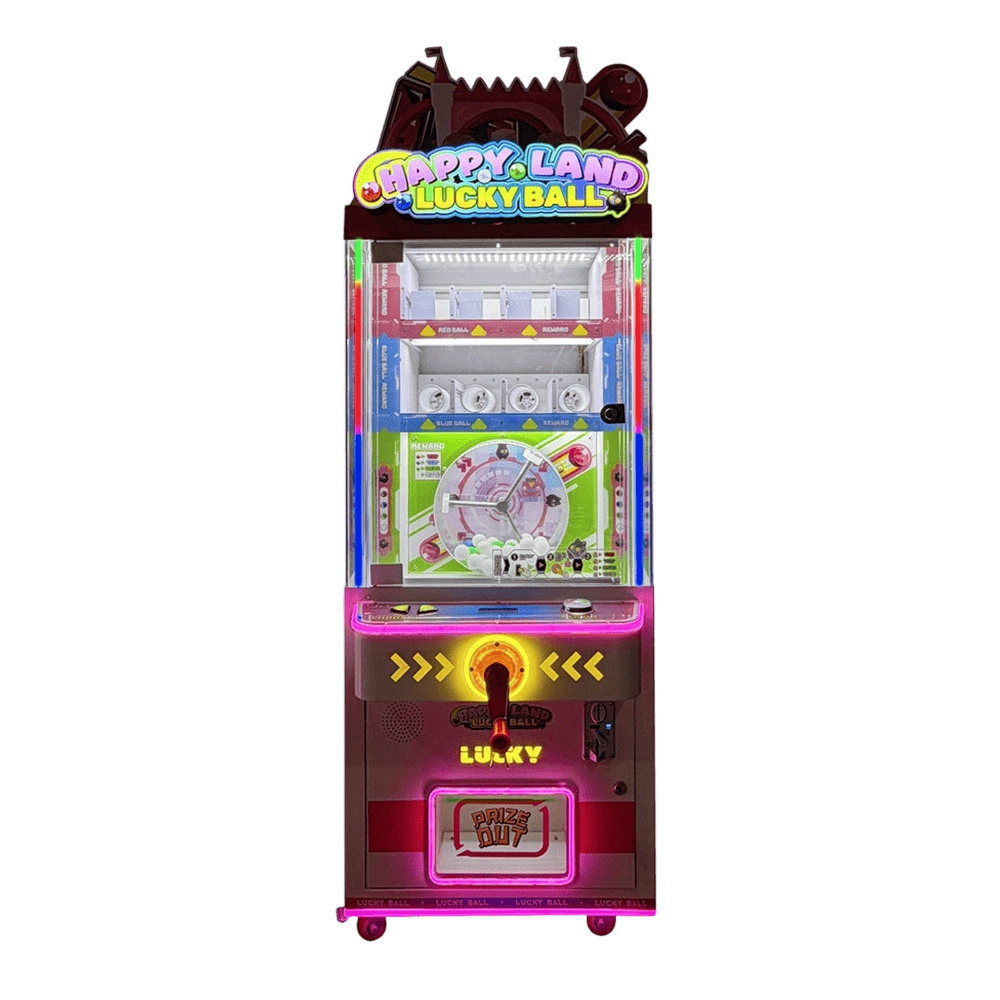
Coin Operated/Card Payment 2 Players SPIN ORBIT Lucky Prize Arcade Game
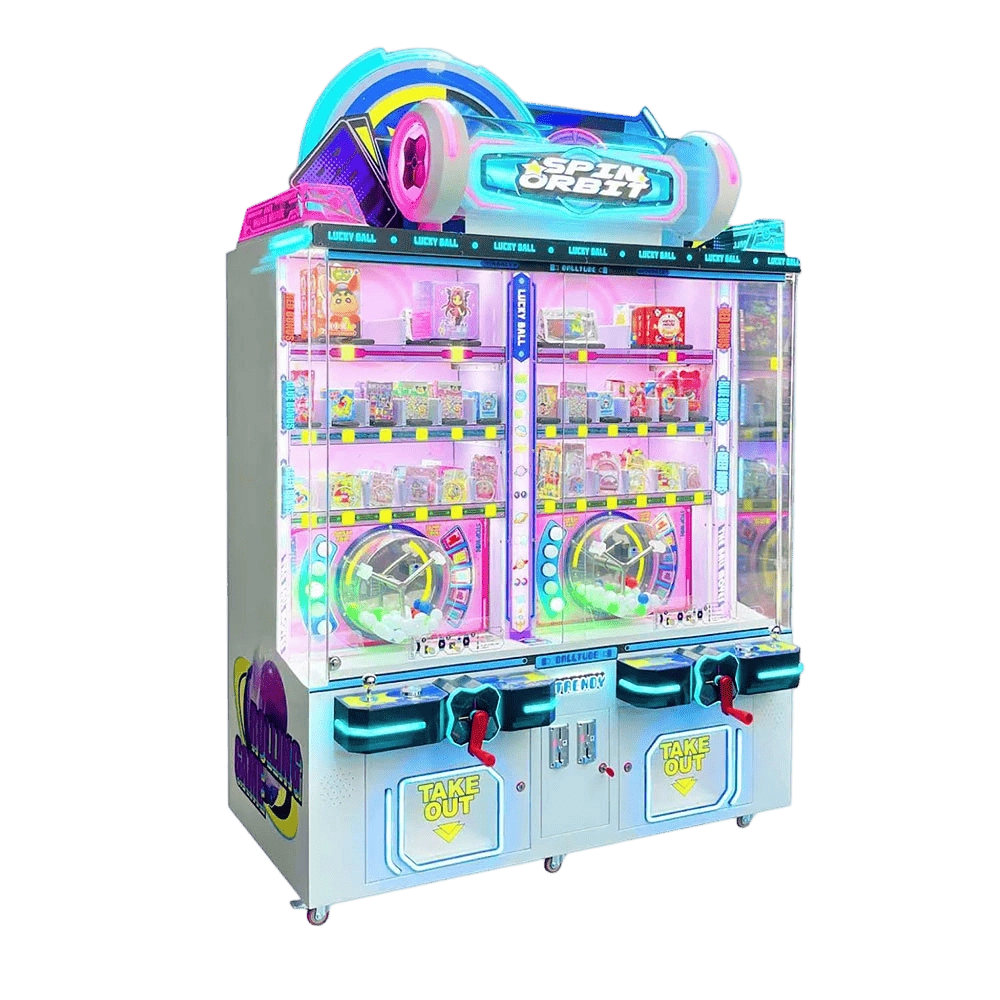
Coin Operated/Card Payment SPIN ORBIT Lucky Prize Arcade Game
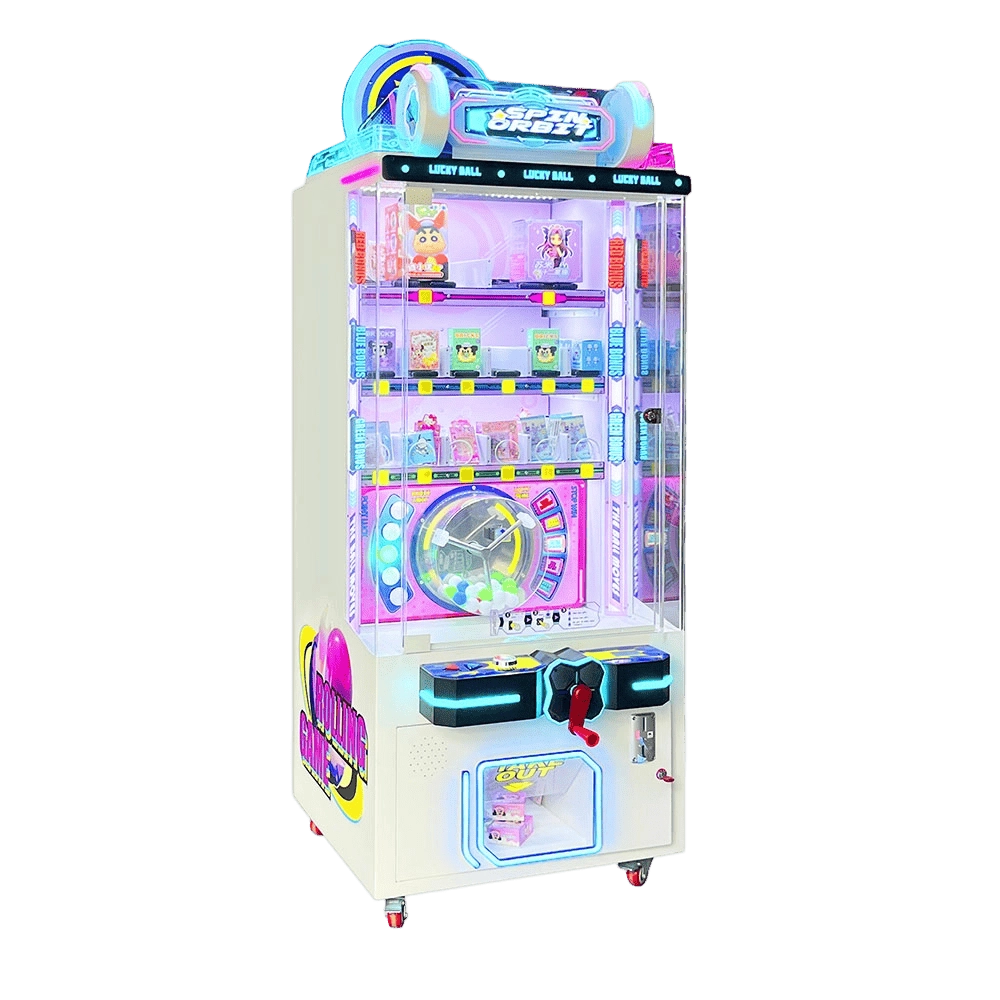
Arcade Prize Lucky Wheel Gift Machine For Amusement Areas
Get in Touch with Jiami Games
If you have any comments or good suggestions, please leave us a message; later our professional staff will contact you as soon as possible.

Innovative Entertainment, at Your Fingertips
Learn about Jiami Games and explore our expertise in console development, innovative design, and global markets.
Quick Links:
© 2026 Jiami Games.
Whatsapp: +8618520390438